

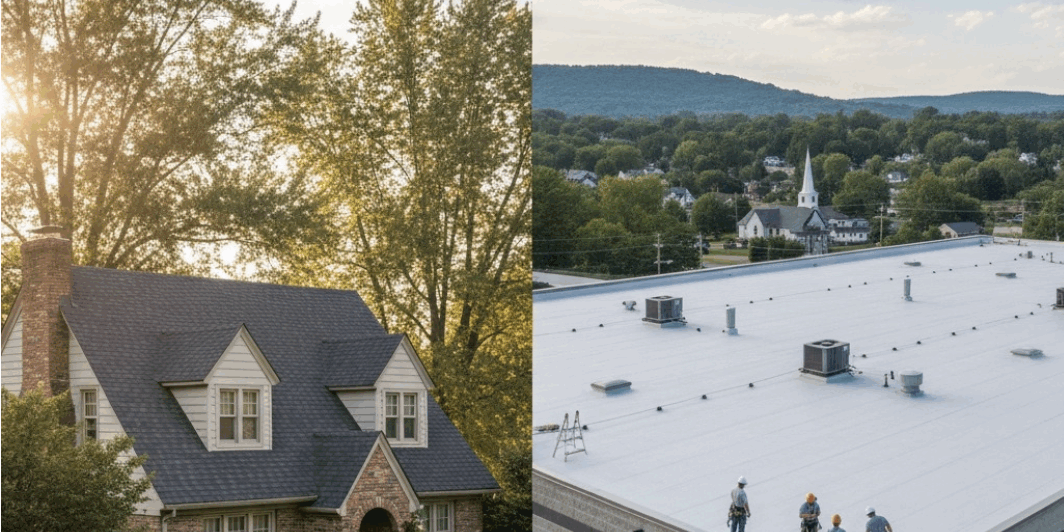
When you’re managing property in Chester County or anywhere across Pennsylvania, understanding the critical differences between residential and commercial roofing isn’t just helpful: it’s essential for making smart investment decisions! Whether you’re a homeowner planning a roof replacement or a business owner evaluating your commercial property needs, these distinctions will directly impact your budget, timeline, and long-term maintenance strategy.
At Smart Improvements, we’ve been transforming properties across Pennsylvania since our founding, and we’ve seen firsthand how the wrong roofing approach can cost property owners thousands in unnecessary repairs and headaches.
The Design Difference: Why Structure Matters
The most fundamental distinction between residential and commercial roofing lies in their structural approach, and this difference drives everything else about your project!
Residential roofs feature pitched designs with steep slopes: typically not exceeding a 12:12 pitch (approximately 45 degrees). This classic approach allows rainwater to shed naturally through gravity, which is why your home’s roof can handle Pennsylvania’s heavy spring rains and winter snow loads so effectively. These roofs are generally smaller in scale and may include architectural features like chimneys, vent stacks, and skylights that add character to your home.
Commercial roofs take a completely different approach with flat or low-slope designs. Walk past any warehouse, shopping center, or office building in Chester, and you’ll see these expansive flat surfaces that create unique challenges. Instead of relying on gravity like residential roofs, commercial systems require sophisticated waterproofing, insulation layers, and comprehensive drainage planning to prevent costly water damage.
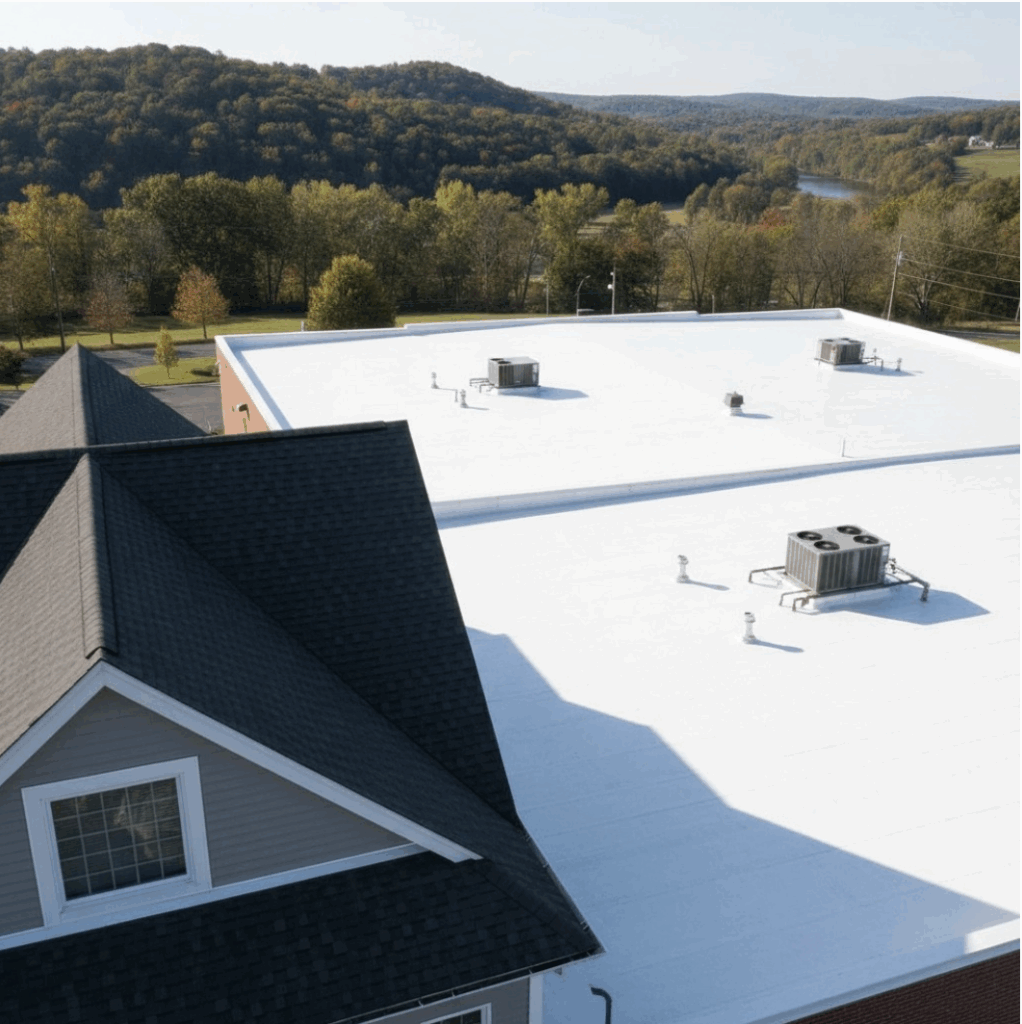
This design difference isn’t just aesthetic: it determines everything from material selection to maintenance schedules to long-term costs!
Materials: Different Jobs Require Different Tools
The materials used in residential versus commercial roofing reflect their distinct functional requirements and environmental challenges.
Residential Roofing Materials
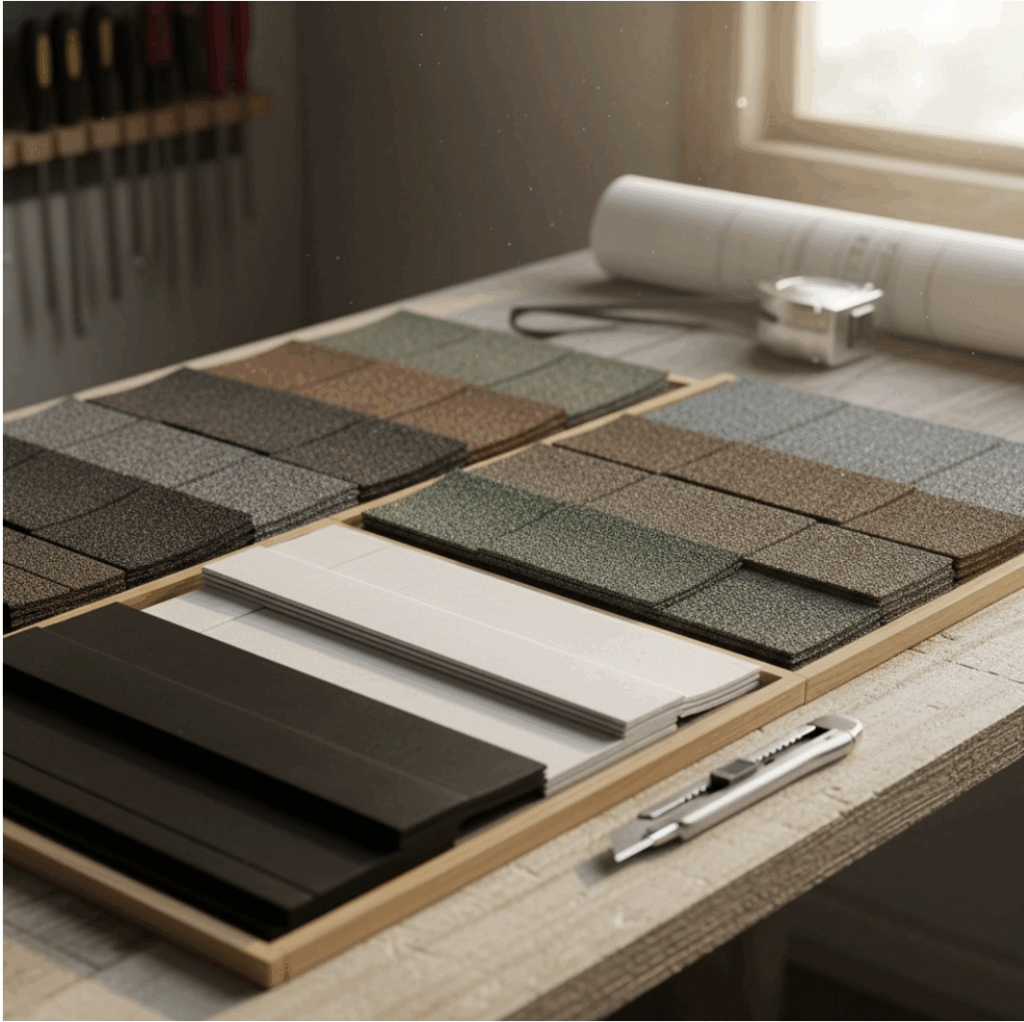
For Pennsylvania homeowners, asphalt shingles remain the gold standard due to their cost-effectiveness and proven performance in our climate. However, you have flexibility in choosing from wood shakes for that classic appeal, metal panels for durability, or premium options like slate and tile for historic Chester County homes.
Residential construction typically involves nailing plywood to wooden rafters to create the roof deck, followed by protective underlayment before installing your chosen roofing material. This straightforward approach keeps installation efficient and costs manageable.
Commercial Roofing Materials
Commercial properties require specialized materials designed for flat or low-slope applications. The most common options include:
- EPDM (Ethylene Propylene Diene Monomer) – excellent for Pennsylvania’s temperature fluctuations
- TPO (Thermoplastic Polyolefin) – energy-efficient and environmentally friendly
- PVC membranes – superior chemical resistance
- Modified bitumen – proven durability in harsh weather
- Sprayed polyurethane foam – excellent insulation properties
These materials resist the oils, chemicals, and foot traffic that commercial roofs encounter daily. Commercial construction involves multiple protective layers including insulation, decking, protective coatings, and reflective surfaces: creating a complex system that requires expert installation.
Installation and Maintenance: Time and Attention Requirements
Here’s where property owners often underestimate the differences between residential and commercial roofing projects!
Residential Maintenance
Your home’s pitched roof naturally handles water drainage, making maintenance relatively straight-forward. Focus on cleaning gutters, removing debris, and scheduling periodic inspections. The pitched design helps you spot problems quickly, and most maintenance tasks are manageable for homeowners or local contractors.
Commercial Maintenance Demands
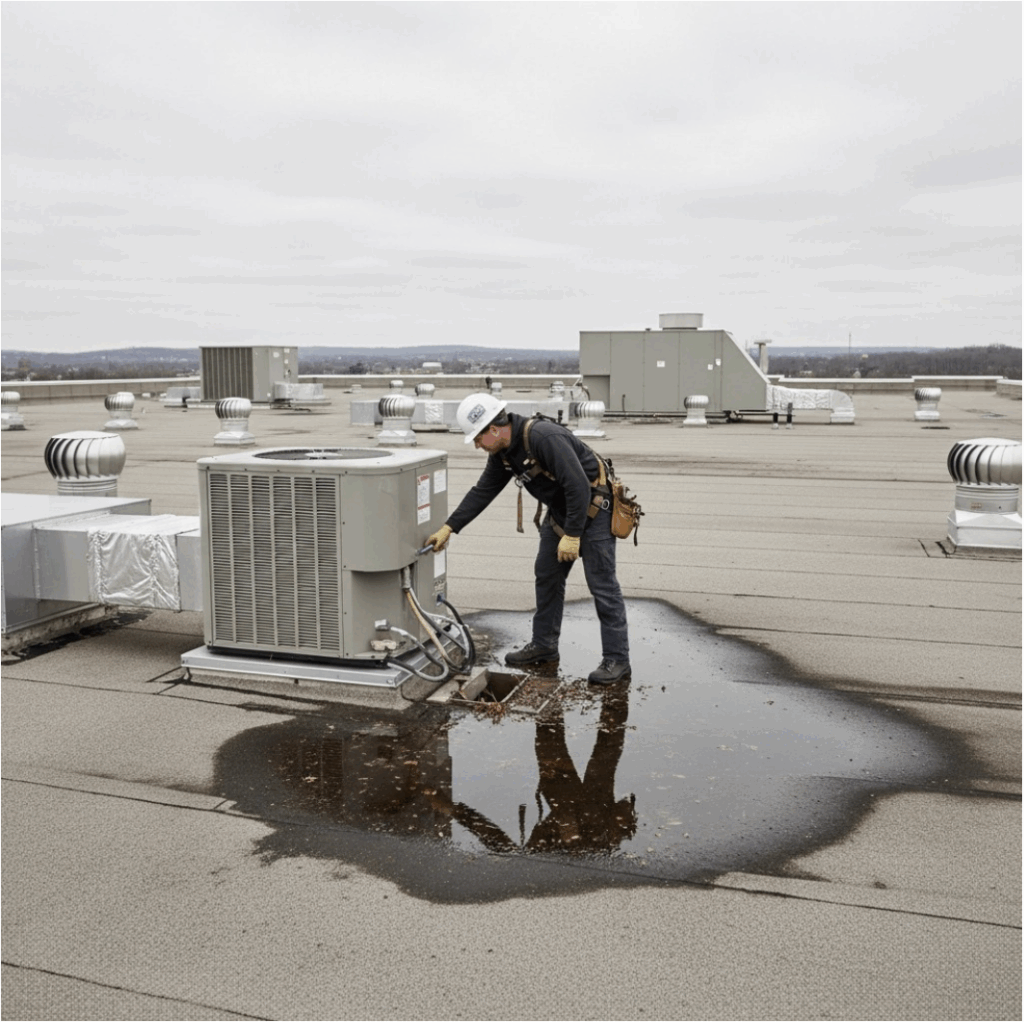
Commercial roofs demand significantly more attention due to their size and complexity. Drainage system care is absolutely critical: clogged drains can cause water ponding that leads to membrane failure and expensive interior damage.
HVAC units, vents, and other equipment sitting directly on commercial roofs create multiple potential leak points that require regular monitoring. Plus, foot traffic from maintenance crews increases wear and tear on the roofing membrane.
Installation timelines differ dramatically too. While residential projects typically complete within days, commercial installations can take weeks due to the larger surface area, specialized equipment requirements, and system complexity.
Cost Considerations: Budget Planning for Pennsylvania Property Owners
Let’s talk numbers: because understanding costs upfront prevents expensive surprises later!
Residential roofing projects are generally more budget-friendly due to smaller surface areas, simpler designs, and standardized materials. Pennsylvania homeowners have flexibility in material selection, allowing you to choose options that fit your specific budget and aesthetic goals.
Commercial roofing requires larger investments due to:
- Extensive surface areas requiring more materials
- Specialized membrane systems and equipment
- Complex installation processes requiring experienced crews
- Additional features like drainage systems and equipment supports
- Ongoing maintenance contracts for optimal performance
The key difference? Residential roofing costs are often one-time investments, while commercial properties require ongoing maintenance budgets to protect their larger investment.
Pennsylvania-Specific Regulatory Requirements
Pennsylvania property owners must navigate different permitting and regulatory landscapes depending on their roof type: and this is where many projects encounter unexpected delays!
Residential Permitting
Residential projects follow a streamlined permitting process focused on basic health and safety standards. Many smaller repairs and replacements may be exempt from permitting requirements, keeping your project timeline and costs manageable. Chester County homeowners typically work with local building departments for straightforward approval processes.
Commercial Permitting Complexity
Commercial roofing projects face multiple layers of review and approval that can significantly impact your timeline and budget. Commercial projects often require unique permits for:
- Fire protection systems compliance
- Accessibility features
- Environmental controls and energy efficiency standards
- Stormwater management (especially important in Pennsylvania)
In cities like Philadelphia, commercial projects must also navigate zoning requirements, parking regulations, and sometimes historic preservation reviews. Performing commercial work without proper permits can result in stop-work orders, fines, and even demolition requirements: costs that far exceed the initial permitting investment!
Side-by-Side Comparison: Making Your Decision
| Property Aspect | Residential Roofing | Commercial Roofing |
|---|---|---|
| Roof Design | Pitched/steep slope (up to 45°) |
Flat or low-slope |
| Primary Materials | Asphalt shingles, metal, tile, wood | EPDM, TPO, PVC, modified bitumen |
| Surface Coverage | Smaller, manageable areas | Large, expansive surfaces |
| Water Management | Gravity-based natural drainage | Engineered drainage systems required |
| Equipment Load | Minimal (occasional solar panels) | Heavy HVAC units, pipes, ventilation |
| Maintenance Frequency | Annual inspections, basic upkeep | Quarterly inspections, proactive maintenance |
| Installation Timeline | Days to one week | Weeks to months |
| Investment Level | Lower initial and ongoing costs | Higher initial and maintenance costs |
| Permitting Process | Streamlined, basic requirements | Complex, multiple permit types |
| Code Compliance | Standard residential building codes | Stringent commercial codes and regulations |
Your Next Steps: Professional Guidance for Pennsylvania Properties
Whether you’re managing a historic Chester County home or a modern commercial facility, choosing the right roofing approach requires understanding these fundamental differences and their long-term implications for your property investment.
For residential property owners, focus on selecting materials that complement your home’s architecture while providing long-term value and weather protection. Ensure proper gutter maintenance and schedule regular inspections to catch small issues before they become expensive problems.
For commercial property owners, invest in comprehensive roofing systems and establish regular maintenance protocols to prevent costly water damage and ensure regulatory compliance. The higher upfront investment pays dividends in reduced emergency repairs and extended roof life.
Ready to discuss your specific roofing needs? Our experienced team at Smart Improvements understands both the technical requirements of different roofing systems and Pennsylvania’s specific regulatory landscape. We’ll help you navigate these decisions with confidence, ensuring your investment provides long-term protection and value for your property.
Contact us today to schedule your consultation and discover how the right roofing approach can transform your property investment strategy!
