

Quick Summary
- Gutter guards can save Chester County homeowners hundreds of dollars in annual cleaning costs and prevent costly water damage.
- The best guard types for Pennsylvania’s leaf-heavy environment are micro-mesh and reverse-curve systems.
- Professional installation ensures proper pitch, secure attachment, and warranty coverage — DIY installs often void manufacturer warranties.
- Most Chester County homeowners see a full return on their gutter guard investment within 3–5 years.
- Why Chester County Homes Need Gutter Guards
- Types of Gutter Guards: Pros and Cons
- Which Gutter Guards Work Best in Chester County?
- How Much Do Gutter Guards Cost?
- DIY vs. Professional Installation
- How Gutter Guards Protect the Rest of Your Home
- Frequently Asked Questions
Why Chester County Homes Need Gutter Guards
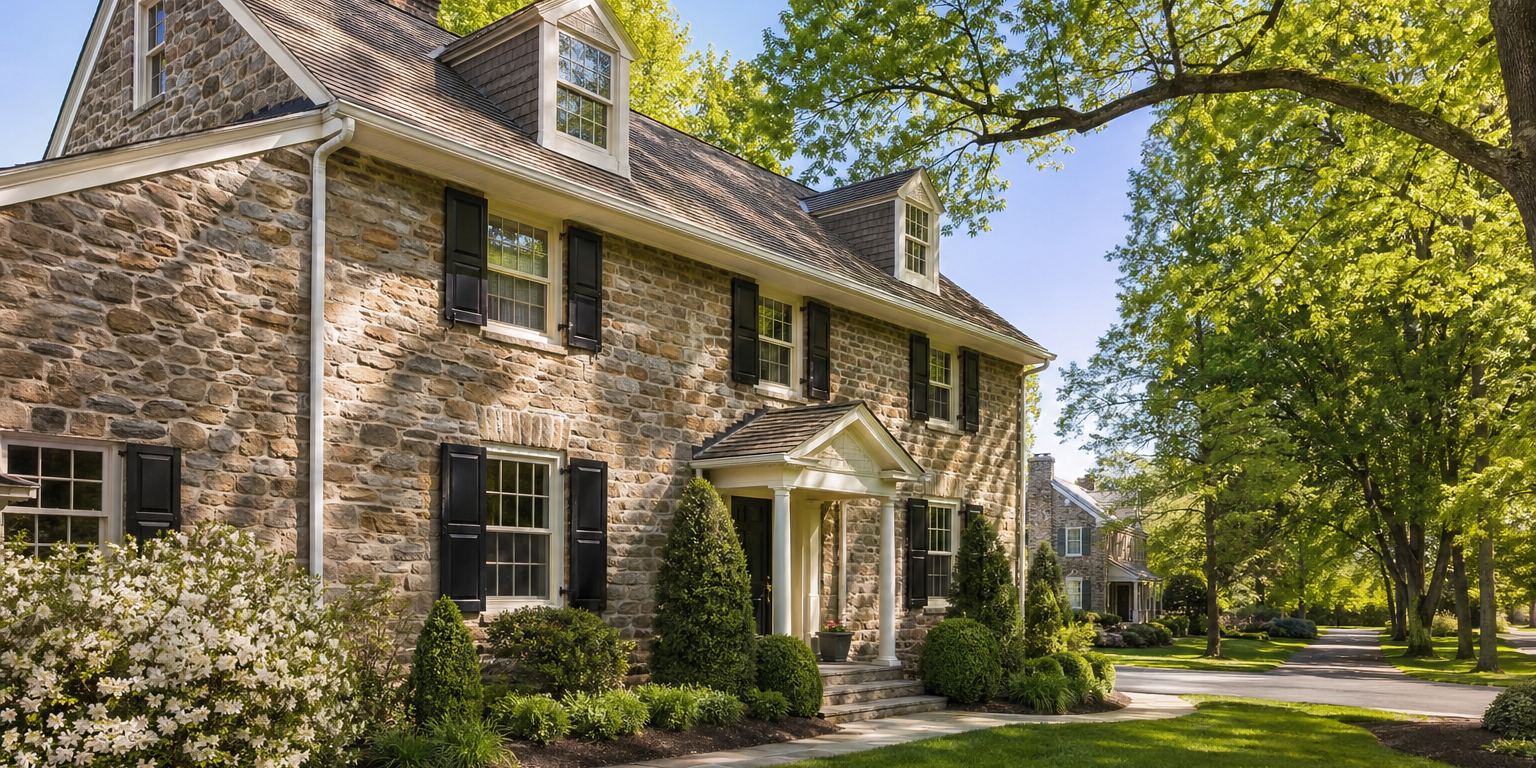
Chester County sits in one of the most heavily wooded suburban corridors in the Philadelphia metro area. According to the Chester County Planning Commission, over 40% of the county remains under tree canopy — beautiful for property values, challenging for gutters. Here’s what happens when gutters stay clogged:- Foundation damage: Water that overflows from clogged gutters pools around your foundation. Over time, this causes cracks, settling, and costly structural repairs — the average foundation repair in Pennsylvania runs $5,000–$12,000.
- Basement flooding: Standing water near the foundation seeps into basements, especially in older stone and Colonial homes common in Phoenixville and West Chester.
- Ice dams: In winter, trapped water freezes inside clogged gutters, creating ice dams that push under shingles and damage your roof deck.
- Pest infestations: Stagnant water in clogged gutters attracts mosquitoes, and decomposing leaf matter invites carpenter ants and wasps.
- Fascia and soffit rot: Water backing up behind gutters saturates the wooden fascia board, leading to expensive exterior repairs.
Types of Gutter Guards: Pros and Cons
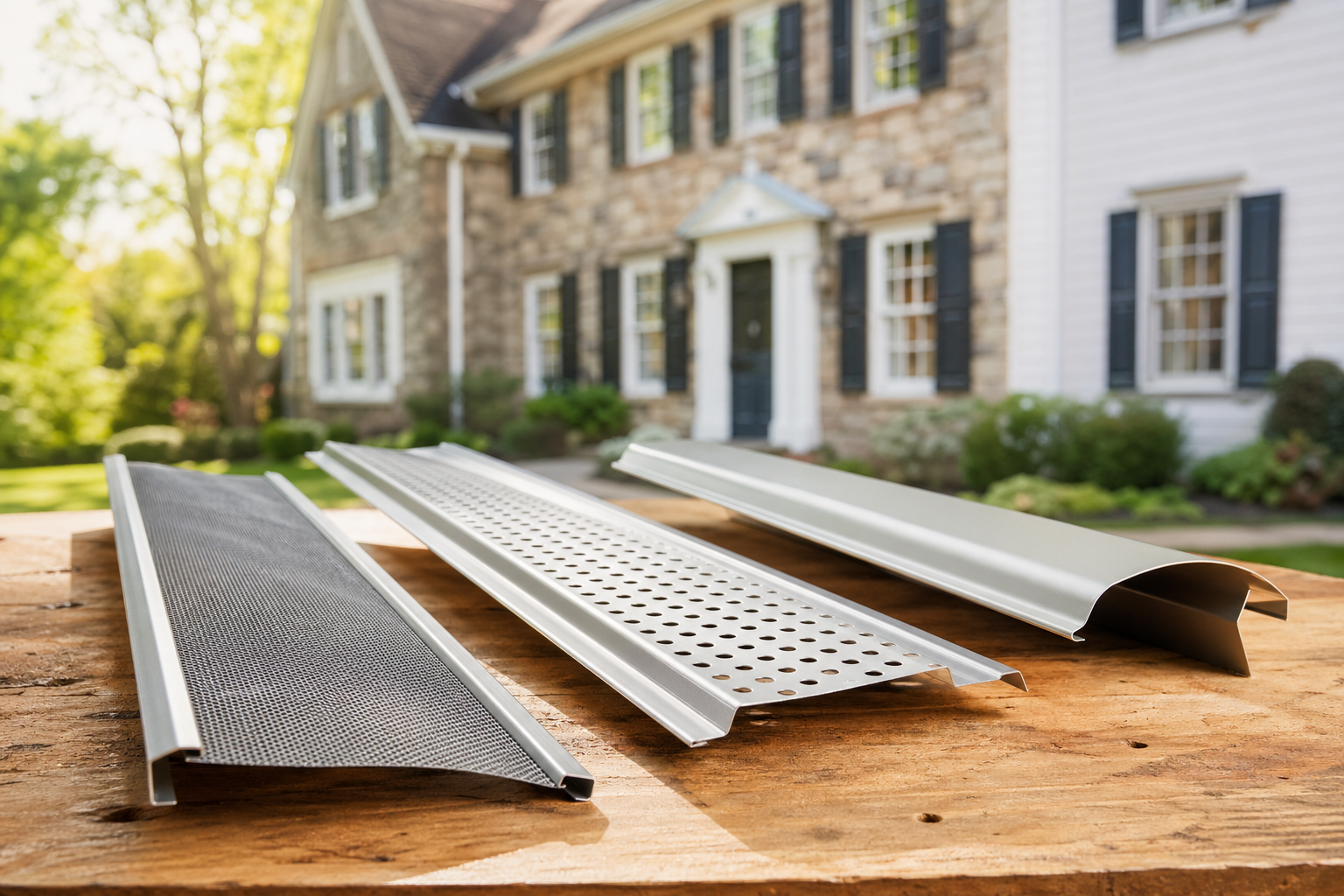
Not all gutter guards are created equal. Here are the five main types you’ll encounter, along with how they perform in Chester County’s environment:1. Mesh / Micro-Mesh Screens
How they work: A fine stainless-steel or aluminum mesh sits over the gutter opening, filtering out leaves, pine needles, and even roof grit. Pros: Excellent filtration; handles heavy leaf fall; low maintenance.Cons: Higher upfront cost; needs occasional rinsing to clear fine sediment.
Best for: Homes surrounded by mature deciduous trees — which describes most of Malvern, Wayne, and Paoli.
2. Reverse-Curve (Surface Tension)
How they work: A solid cover with a curved lip directs water into the gutter while leaves slide off the edge. Pros: Very durable; handles heavy rain volumes well.Cons: Visible from ground level; can struggle with small debris like seed pods.
Best for: Homes on larger lots where appearance from street level is less of a concern.
3. Bottle Brush Inserts
How they work: Cylindrical brushes sit inside the gutter channel, catching leaves on top while water flows through. Pros: Cheapest option; easy DIY install.Cons: Debris accumulates on the brushes and still requires cleaning; can sag over time.
Best for: Budget-conscious homeowners looking for a temporary solution.
4. Foam Inserts
How they work: Porous foam blocks fit inside the gutter, letting water through while blocking debris. Pros: Inexpensive; simple installation.Cons: Degrades in UV light within 2–3 years; can harbor mold and seeds that sprout inside the gutter.
Best for: Short-term use only — not recommended for long-term protection.
5. Perforated Aluminum Covers
How they work: A solid aluminum cover with small holes sits on top of the gutter. Pros: Durable; moderate price point.Cons: Larger holes let small debris through; smaller holes can clog with roof granules.
Best for: Homes with moderate tree coverage and primarily large-leaf debris.
Which Gutter Guards Work Best in Chester County?
Based on our experience installing and servicing gutters across Downingtown, Berwyn, West Chester, and Phoenixville, we consistently recommend micro-mesh gutter guards for most Chester County homes. Here’s why:- Heavy deciduous canopy: Oak, maple, and sycamore leaves are large enough that many guard types can handle them — but it’s the smaller debris (seed pods, oak catkins, pine needles from mixed plantings) that causes real problems. Micro-mesh catches it all.
- Four-season weather: Chester County gets an average of 47 inches of rain and 23 inches of snow annually. Micro-mesh guards handle high water volume without ice-related buckling.
- Historic and Colonial architecture: Many Chester County homes feature traditional rooflines with multiple valleys and dormers. Micro-mesh systems conform to complex roof geometry better than rigid reverse-curve guards.
How Much Do Gutter Guards Cost?
Here’s what Chester County homeowners can expect to invest:| Guard Type | Cost Per Linear Foot (Installed) | Typical Home (150 LF) |
|---|---|---|
| Foam inserts | $2 – $4 | $300 – $600 |
| Bottle brush | $3 – $5 | $450 – $750 |
| Perforated aluminum | $6 – $10 | $900 – $1,500 |
| Micro-mesh | $8 – $15 | $1,200 – $2,250 |
| Reverse-curve | $10 – $20 | $1,500 – $3,000 |
DIY vs. Professional Gutter Guard Installation
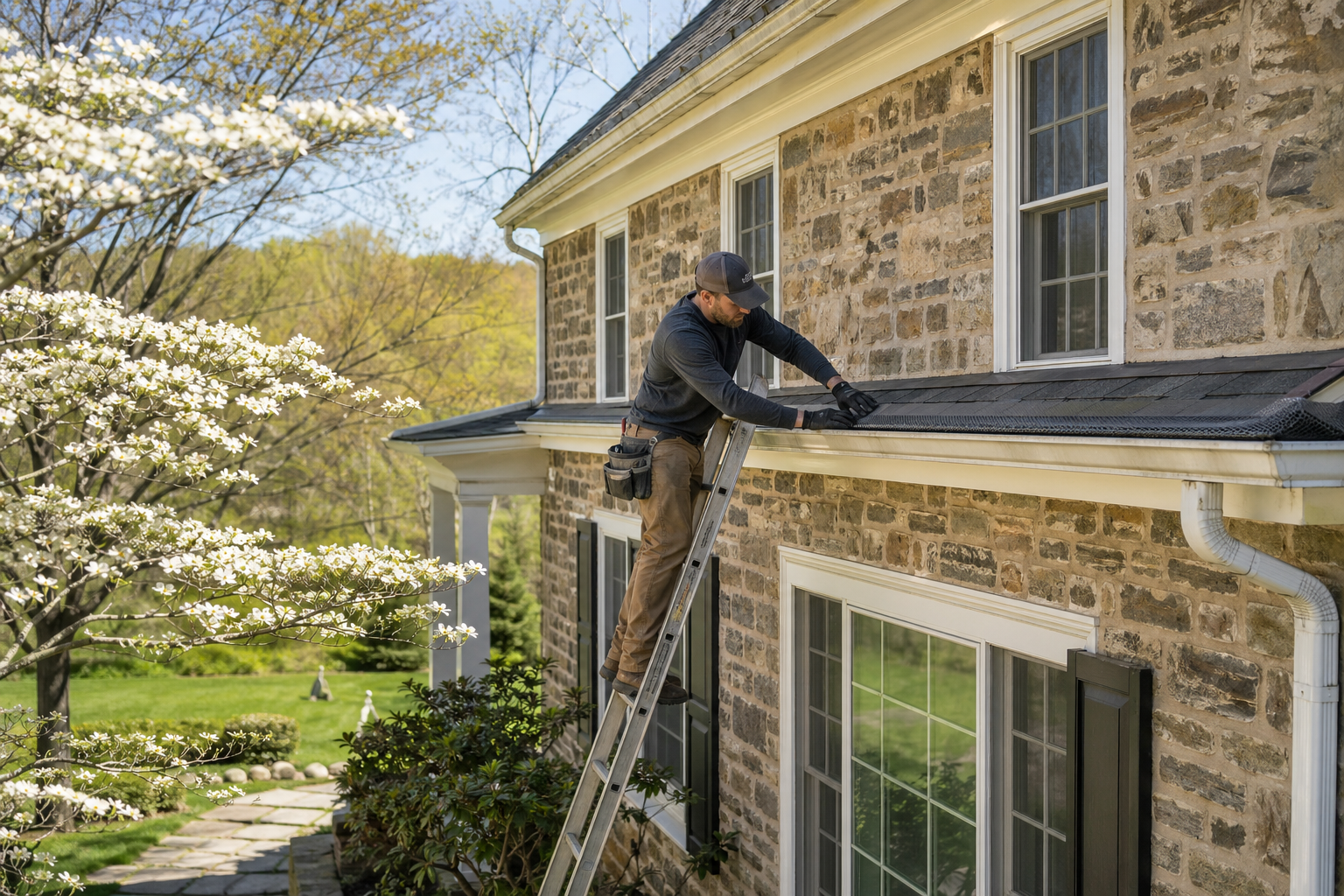
While some gutter guard products market themselves as easy DIY installs, there are important reasons to work with a professional, especially in Chester County:- Roof pitch matters: Chester County’s Colonial, farmhouse, and Cape Cod homes have steeper roof pitches that affect water flow into gutters. A professional installer adjusts guard placement for your specific roof angle.
- Gutter condition assessment: Before guards go on, your existing gutters need to be inspected for sagging, leaks, and proper slope. We’ve seen homeowners install guards over gutters that were already failing — which just hides the problem until real damage occurs.
- Warranty protection: Most premium guard manufacturers require professional installation for their warranty to be valid. A DIY install could leave you unprotected.
- Safety: Working on ladders at gutter height (often 20+ feet on two-story homes) is inherently risky. Falls from ladders account for over 500,000 injuries per year in the U.S., according to the CDC.