

Quick Summary
- Small bathrooms are one of the most cost-effective renovation projects in Chester County PA homes — high impact relative to square footage.
- The biggest gains come from smart tile choices, better lighting, right-sized vanities, and storage solutions that don’t eat floor space.
- A professional gut-and-refresh on a small bath in Chester County typically runs $8,000–$20,000 depending on finishes and whether layout changes are involved.
- You don’t have to move walls or expand square footage to make a small bathroom feel dramatically larger and more luxurious.
- Why Small Bathrooms Deserve More Attention Than They Get
- Tile Tricks That Make Bathrooms Feel Larger
- Vanity and Storage: Getting More Without Taking Up More Space
- Lighting: The Most Underrated Element in Any Bathroom
- Fixture Upgrades That Punch Above Their Weight
- When to Consider Changing the Layout
- What Does a Small Bathroom Renovation Cost in Chester County?
- Frequently Asked Questions
Why Small Bathrooms Deserve More Attention Than They Get
Small bathrooms — typically anything under 50 square feet — get neglected for two reasons: homeowners assume they’re too small to look good, and they assume improvement requires major construction. Neither is true. In Chester County’s competitive real estate market, buyers consistently evaluate bathrooms with a critical eye. A dated, cramped guest bath with pink tile and a pedestal sink creates an impression that lingers — especially when comparable homes down the street in Wayne or Berwyn have been refreshed with clean, contemporary finishes. According to the National Association of Realtors’ 2025 Remodeling Impact Report, bathroom renovations recover an average of 71% of their cost at resale — and in Chester County’s tight housing market, well-executed bathroom updates consistently move the needle on offer prices. Beyond resale, there’s the daily quality-of-life argument. You use your bathrooms multiple times every day. A space that functions well, looks clean, and feels considered is worth the investment for your own enjoyment — not just for future buyers.Tile Tricks That Make Bathrooms Feel Larger
Tile is the single biggest visual decision in a small bathroom renovation, and the choices you make have a dramatic effect on how large or cramped the space feels.Go Larger Than You Think
This is counterintuitive, but it works: larger tiles (12×24 or even 24×24) make small bathrooms feel bigger. Smaller tiles mean more grout lines, and more grout lines visually chop up the space. Large-format tiles unify the floor or walls into a single surface that reads as expansive. For Chester County homes with small, older bathrooms — common in Malvern, Paoli, and West Chester — we often recommend 12×24 ceramic or porcelain in a warm neutral or light grey. It’s classic, timeless, and won’t look dated in five years.Extend Tile Higher on the Walls
Running tile from floor to ceiling (rather than just to a chair rail or halfway up the wall) eliminates the horizontal break that makes rooms feel shorter. Full-height tile, especially in a light color, creates a clean, spa-like finish that transforms builder-grade bathrooms completely.Use Diagonal or Large-Format Patterns on the Floor
Diagonal tile installation on the floor visually widens a narrow bathroom. Larger floor tiles also mean fewer grout lines, which again reads as more space. For powder rooms in Downingtown or Phoenixville homes, a patterned cement-look porcelain can add personality without overwhelming a small footprint.Keep Color Schemes Light and Cohesive
Light, cohesive palettes — creamy whites, soft warm greys, pale greiges — bounce light around a small space and make walls feel farther apart. High-contrast combinations work beautifully in large bathrooms but can feel visually busy in tight quarters.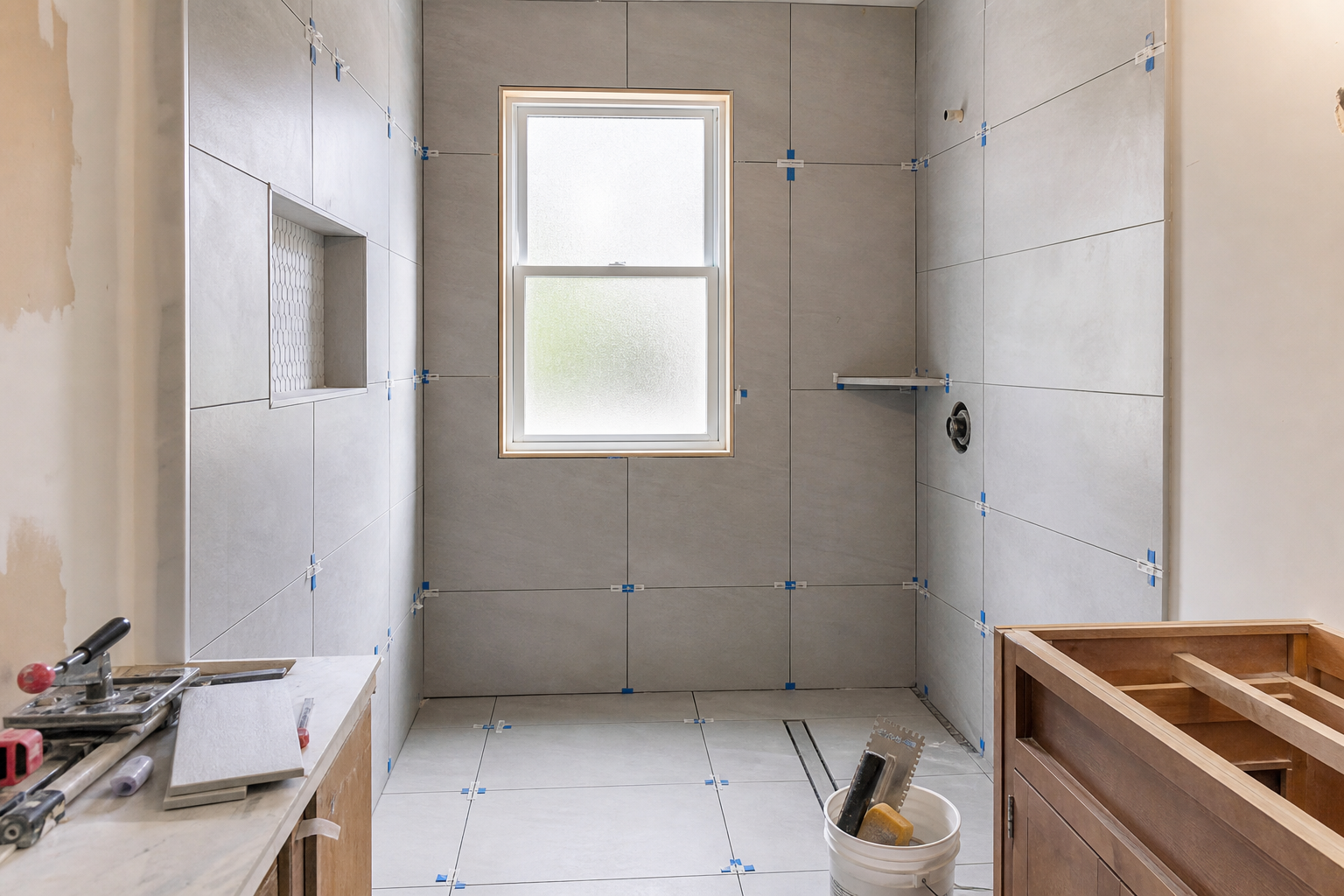
Vanity and Storage: Getting More Without Taking Up More Space
In a small bathroom, the vanity is often the dominant piece of furniture — and getting the right one is critical.Float the Vanity Off the Floor
A wall-mounted (floating) vanity does two important things: it exposes floor space underneath, which visually expands the room, and it makes cleaning easier. Even a small amount of visible floor beneath the vanity creates a sense of airiness that makes the space feel larger. Floating vanities are especially effective in the half baths and small en suites common in older Wayne and Berwyn homes, where every visual inch counts.Right-Size, Don’t Downsize
Homeowners sometimes assume a small bathroom needs a tiny vanity. That’s not always true — a 36-inch or even 48-inch vanity may fit comfortably where a 24-inch one felt cramped, while providing significantly more storage and counter space. Measure carefully, then maximize.Build Vertically for Storage
When floor space is limited, go up. Tall, narrow linen towers. Recessed medicine cabinets that don’t project into the room. Floating shelves above the toilet. Built-in niches in the shower surround. These storage solutions don’t eat floor space but dramatically increase usable storage in small bathrooms.Eliminate the Pedestal Sink in Most Cases
Pedestal sinks look elegant but eliminate all the under-sink storage you’d otherwise have. Unless you’re renovating a powder room where storage isn’t critical, replacing a pedestal with a compact vanity cabinet almost always improves the bathroom’s functionality.Lighting: The Most Underrated Element in Any Bathroom
Nothing makes a small bathroom feel more premium — or more dingy — than lighting. It’s consistently underinvested in renovation budgets, and it’s one of the highest-impact upgrades you can make.Ditch the Single Overhead Light
A single ceiling fixture is the default in most older Chester County bathrooms, and it’s almost always inadequate. It creates shadows on the face at the mirror, leaves corners dim, and makes the entire space feel utilitarian rather than considered.Add Side Lighting at the Vanity Mirror
Side-mounted sconces flanking the mirror — or a wide horizontal bar light above it — eliminate the shadows that overhead-only lighting creates. This is the single best lighting upgrade in most small bathrooms, and it’s not expensive.Layer Your Lighting
Ideally, small bathrooms have three types of lighting:- Ambient: Overall illumination from a ceiling fixture or recessed lights
- Task: Focused light at the vanity mirror for grooming
- Accent: Optional — toe-kick lighting under floating vanities, or backlit mirrors that add warmth and depth
Choose Warm Bulb Temperatures
Bathroom lighting in the 2700–3000K color temperature range (warm white) is flattering and comfortable. The harsh 5000K “daylight” bulbs common in older bathroom fixtures make the space feel clinical and unflattering.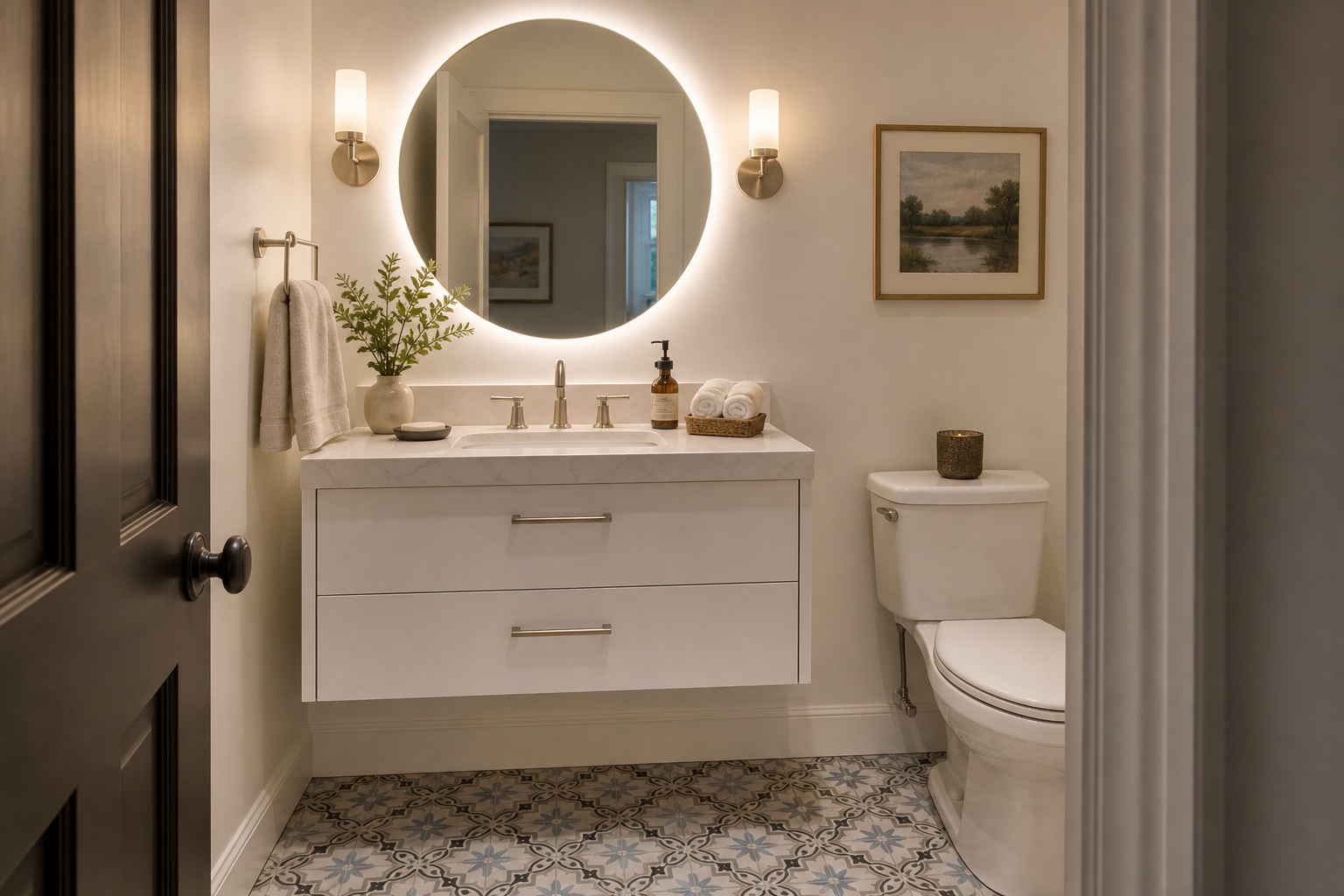
Fixture Upgrades That Punch Above Their Weight
Sometimes the biggest improvements come from relatively small investments. A few fixture swaps that consistently transform small bathrooms:New Toilet
Older toilets with round, bulky profiles take up more visual and physical space than modern elongated or compact-elongated models. Replacing a 20-year-old toilet with a current model also adds water efficiency — a meaningful long-term saving.Frameless Shower Enclosure or Doorless Shower
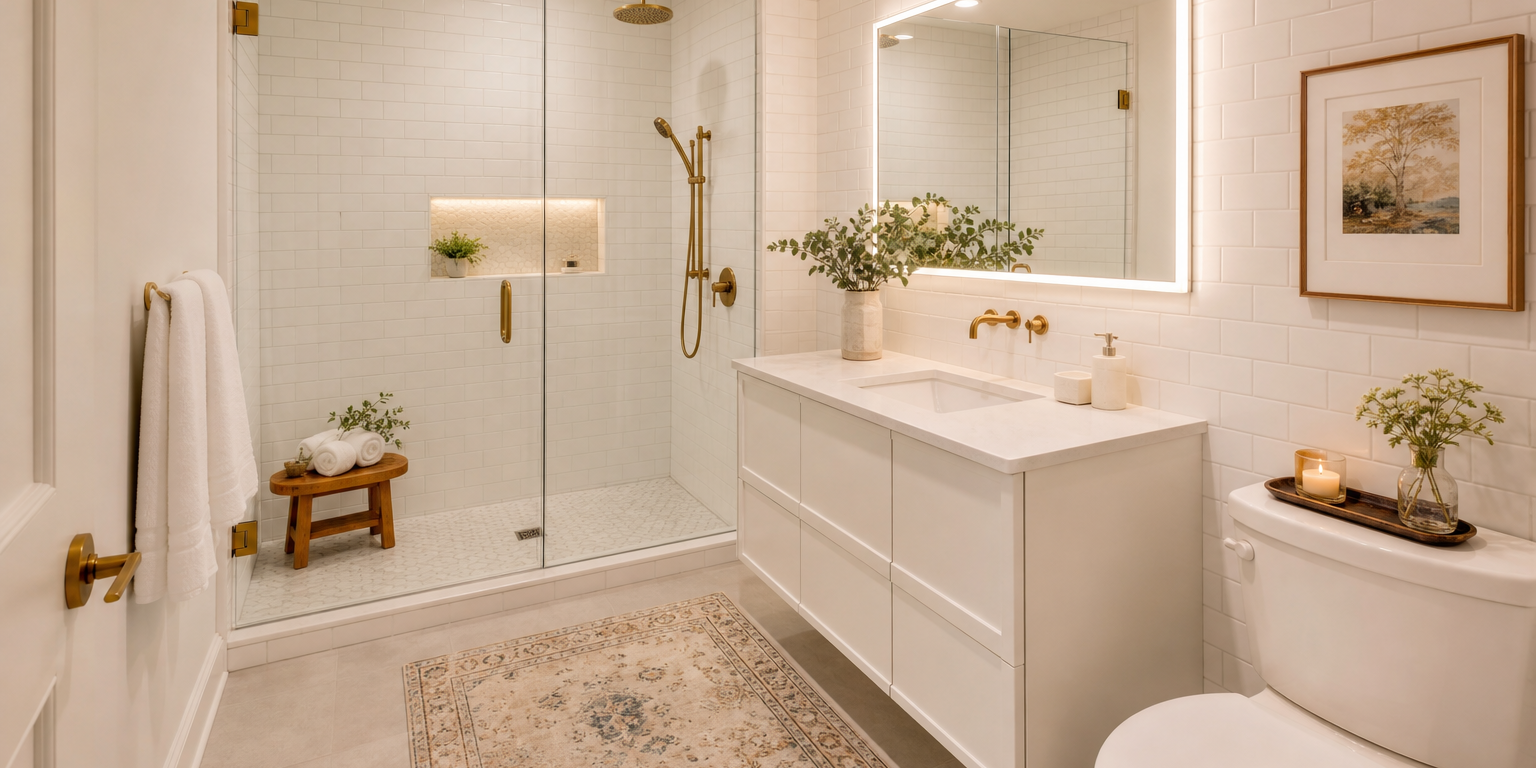
Framed glass shower doors with thick metal frames visually chop up a small bathroom. Frameless glass or a walk-in doorless shower (if the layout supports it) opens the space dramatically. In a bathroom with a tub-shower combination, replacing the shower curtain with a frameless glass panel can transform the entire feel of the room.Updated Hardware Throughout
Towel bars, toilet paper holders, cabinet pulls, and faucet finishes should all coordinate. Switching from builder-grade chrome to brushed brass, matte black, or brushed nickel creates a cohesive, intentional feel — and it’s one of the most affordable upgrades in any bathroom renovation.Statement Mirror
The mirror is one of the most visible elements in any bathroom. Replacing a basic rectangular mirror with a framed design, an arch mirror, or a backlit LED mirror immediately elevates the room’s visual quality. In small bathrooms, a slightly oversized mirror (wider than the vanity) also reflects more light and space.When to Consider Changing the Layout
Most small bathroom renovations in Chester County achieve dramatic results without touching the plumbing layout. Fixtures stay where they are — toilet, sink, and shower/tub remain in their existing locations — and the renovation focuses on surface finishes, lighting, and fixtures. However, there are situations where a layout change is worth considering:- The toilet is the first thing you see entering the bathroom. Moving it to a less prominent position (often possible by rotating the fixture) can dramatically improve the room’s visual flow.
- The shower/tub combination is eating space that a separate shower would use more efficiently. If no one in the household uses the tub, replacing a tub-shower combo with a walk-in shower can reclaim significant usable space.
- The door swings into the room and hits the toilet or vanity. Rehinging a door to swing outward or switching to a pocket or barn door is a small change that meaningfully improves function in tight spaces.
What Does a Small Bathroom Renovation Cost in Chester County?
Cost varies by scope, existing conditions, and finish level. Here’s a realistic range for Chester County homeowners:| Scope | Estimated Cost |
|---|---|
| Cosmetic refresh (paint, fixtures, hardware, mirror) | $2,000 – $5,000 |
| Partial renovation (new vanity, tile floor, toilet, lighting) | $5,000 – $10,000 |
| Full gut renovation (tile walls + floor, new vanity, shower, fixtures, lighting) | $10,000 – $20,000 |
| Full renovation with layout changes or premium materials | $20,000 – $35,000+ |