

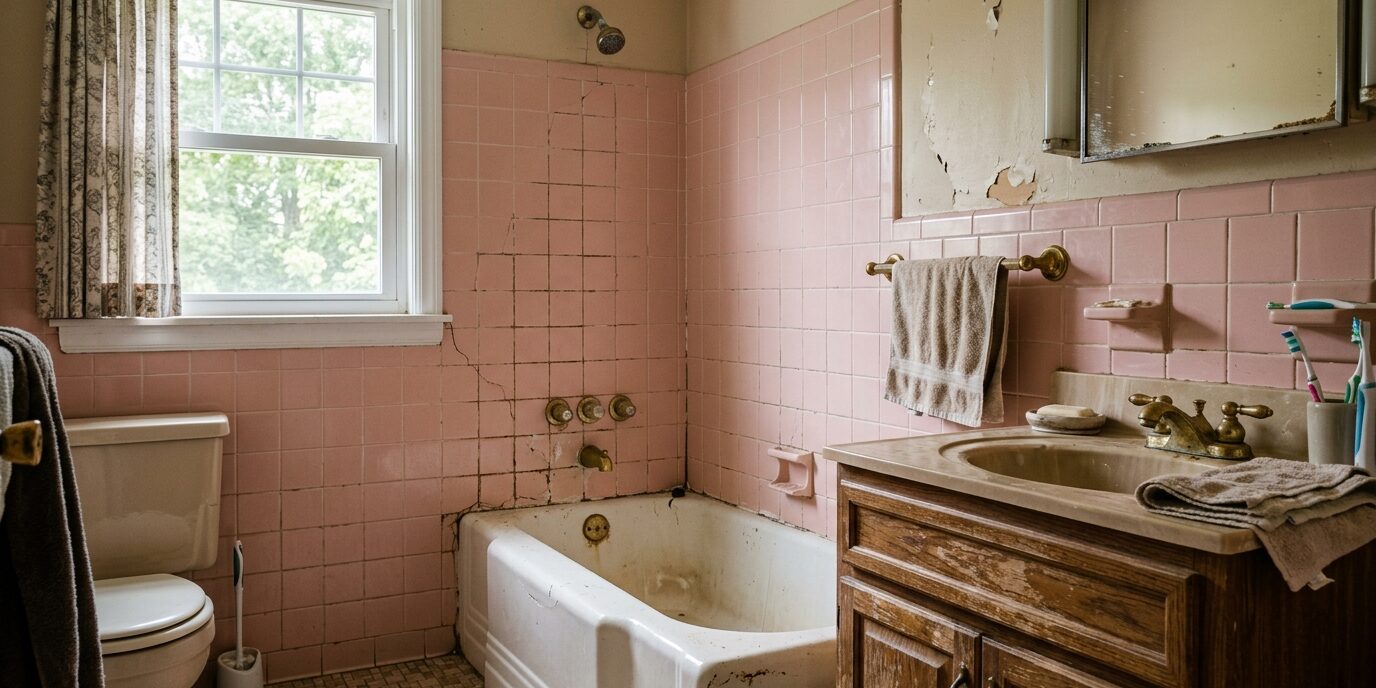
Your bathroom is one of the most-used rooms in your home — and one of the easiest to neglect. A slow drip here, a little cracked grout there, a vanity that’s been “fine” for twenty years. Chester County homeowners are great at putting off bathroom updates until something breaks. But there’s a difference between “it still works” and “it’s worth keeping.”
So how do you know when it’s time to stop patching and start planning a real renovation? Here are 7 signs that your Chester County bathroom is ready for a remodel — and what to do about each one.
- Persistent leaks, mold, or water damage are the clearest signals that cosmetic fixes won’t cut it.
- Outdated plumbing, no GFCI outlets, or an undersized exhaust fan are safety and code concerns worth fixing now.
- If your bathroom is more than 20–25 years old and has never been updated, it’s almost certainly overdue.
- A full renovation typically delivers 60–70% ROI at resale — making it one of the smartest investments for Chester County homeowners.
- Smarter Improvements offers free in-home assessments throughout Chester County PA — we’ll tell you honestly what your bathroom needs.
Sign #1: You’re Seeing Mold, Mildew, or Water Stains
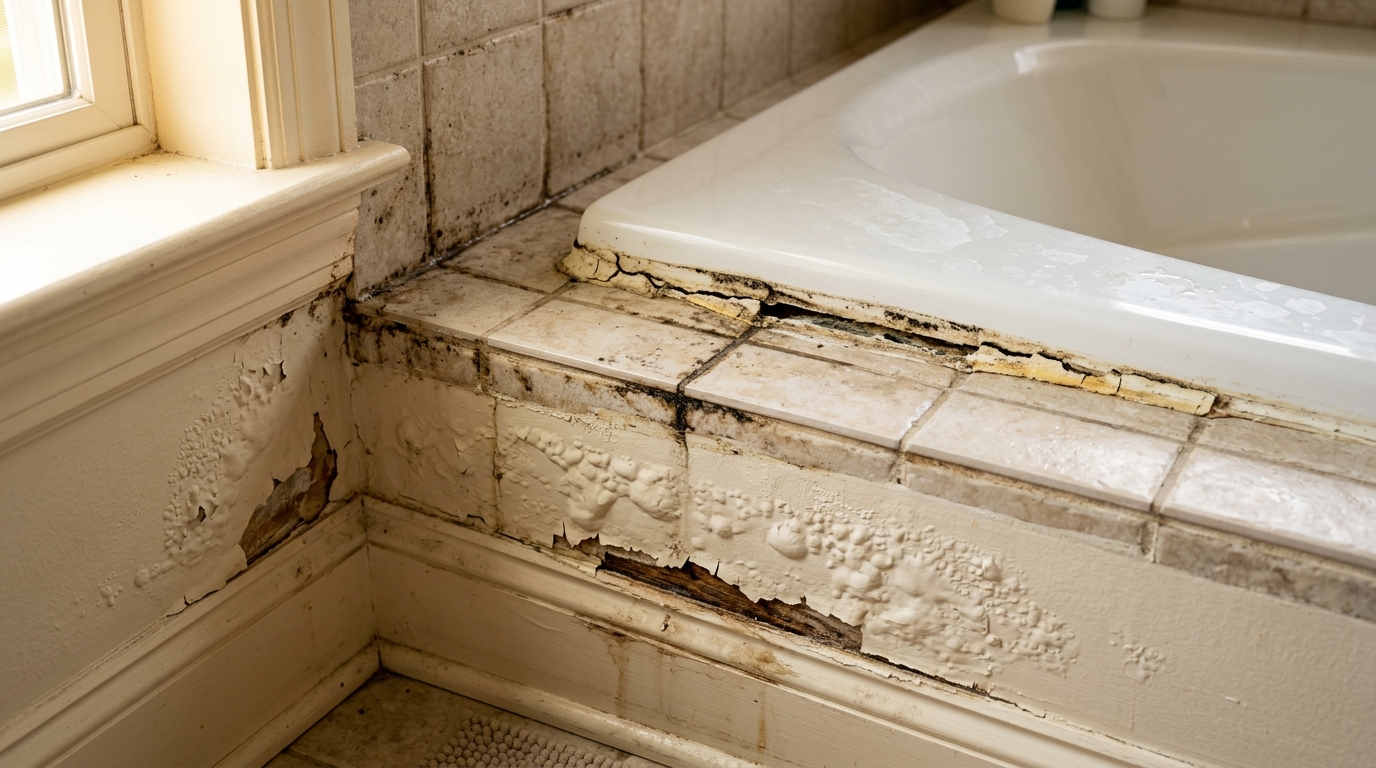
Surface mold that wipes right off isn’t necessarily an emergency. But recurring mold, dark staining in grout lines, soft spots in the wall near the tub, or water stains on the ceiling below an upstairs bathroom — those are signs of a moisture problem that a cleaning won’t solve.
Chester County PA’s climate doesn’t help. Humid summers and freeze-thaw winters stress caulk and grout over time, letting water work behind the tile. Once that happens, the damage compounds — wet subfloor, rot in the framing, mold inside the wall cavity. We’ve seen it in older homes across Downingtown, Coatesville, and Berwyn: a bathroom that looked “fine” from the outside was completely rotted behind the shower wall.
What to do: Don’t just re-caulk. Have a contractor inspect behind the wall before deciding between a repair and a full renovation. Often the answer is a gut renovation — but you’ll know for sure once the wall comes out.
Sign #2: The Grout Is Cracked, Stained, and Beyond Saving
Grout has a lifespan. In a heavily used bathroom, it typically starts failing after 8–15 years — cracking, absorbing stains, and losing its seal against water intrusion. Once grout is cracked through to the substrate, water is getting behind your tile whether you see it or not.
Regrouting is sometimes a viable option for a bathroom that’s otherwise in good shape. But if the tile itself is also chipped, dated, or loosening from the wall, a full retile — or a full bathroom renovation — is the smarter investment. Tiling over failing substrate just delays the inevitable.
What to do: If the grout is failing in isolated spots and the tile and substrate are solid, regrouting may work. If it’s failing throughout — or you hate the tile anyway — it’s time for a real renovation.
Sign #3: Your Plumbing Is Acting Up Regularly
One slow drain is a clog. A toilet that runs, a faucet that drips, low water pressure, and a tub that drains slowly all at the same time — that’s a plumbing system telling you it’s past its prime.
Many Chester County homes built before 1980 still have original galvanized steel supply pipes, which corrode from the inside out, restricting flow and eventually failing. Older homes in Phoenixville, Thorndale, and Malvern frequently have this issue. Replacing corroded plumbing is disruptive work — and if you’re opening walls anyway, that’s often the right time to renovate the whole bathroom rather than patch and reassemble.
What to do: Get a plumber to assess the supply and drain lines. If the pipes are aging galvanized steel, a full replumb is likely — and that’s a natural trigger for a full bathroom renovation.
Sign #4: There’s No Exhaust Fan — Or It’s Completely Ineffective
A working exhaust fan is the single most important tool for preventing bathroom moisture damage. Without one, every shower fills the room with steam that soaks into walls, ceilings, and fixtures over time.
Many older Chester County homes — particularly those built before 1975 — either have no exhaust fan at all, or have one that’s so underpowered it barely moves air. If your mirror stays fogged for 20+ minutes after a shower, or you see paint peeling near the ceiling, your ventilation is failing you.
Pennsylvania building code now requires exhaust fans in bathrooms without operable windows. If you’re renovating, upgrading to a properly sized fan (matched to the bathroom’s square footage) is a code requirement and a smart investment in preventing future damage.
What to do: A fan upgrade alone can sometimes be done as a standalone project. But if the bathroom has other aging issues, it often makes sense to tackle them together in a full renovation.
Sign #5: Your Electrical Doesn’t Meet Modern Safety Standards
GFCI (Ground Fault Circuit Interrupter) outlets became required in bathrooms under the National Electrical Code in 1975 — but plenty of Chester County homes built before then still have unprotected outlets near the sink. That’s a genuine safety risk, and it’s also a code violation if you’re selling the home.
Beyond GFCI protection, older bathrooms often lack adequate lighting circuits, have no dedicated circuit for a bathroom heater, or have wiring that’s simply too old for modern loads. If your bathroom lights flicker, breakers trip during peak use, or you’re running extension cords for a hair dryer — it’s past time for an electrical update.
What to do: At minimum, GFCI protection is a quick standalone fix. But if the wiring itself is aging or undersized, a bathroom renovation is the right time to address it properly.
Sign #6: The Layout Doesn’t Work for How You Actually Live
This one is less about damage and more about function. Does the bathroom door swing into the toilet? Is the shower so narrow you can barely turn around? Are you sharing a single vanity in a master bath that was designed for one person, not two?
Chester County’s stock of older Colonial and Cape Cod homes often features bathrooms that were designed for a different era — small, functional, and not particularly comfortable. If your primary bathroom is a daily frustration rather than a daily pleasure, that’s a quality-of-life issue worth fixing.
Layout changes require a full renovation — you can’t meaningfully change the footprint or configuration with a cosmetic refresh. But for a bathroom you use every day, the ROI in daily comfort is real. And when it comes time to sell, a renovated primary bathroom is one of the most powerful selling points in Chester County real estate.
What to do: If the layout is the problem, there’s no partial fix — a full gut renovation is the path. Schedule a consultation to explore what’s structurally possible in your space.
Sign #7: The Bathroom Is Just Old — And It Shows
Sometimes there’s no single dramatic failure. The bathroom is just old. Harvest gold tile. A pink tub from the 1970s. Builder-grade vanity that’s been there since the house was built in 1988. Everything technically works — it’s just dated, worn, and dragging down the feel of the whole house.
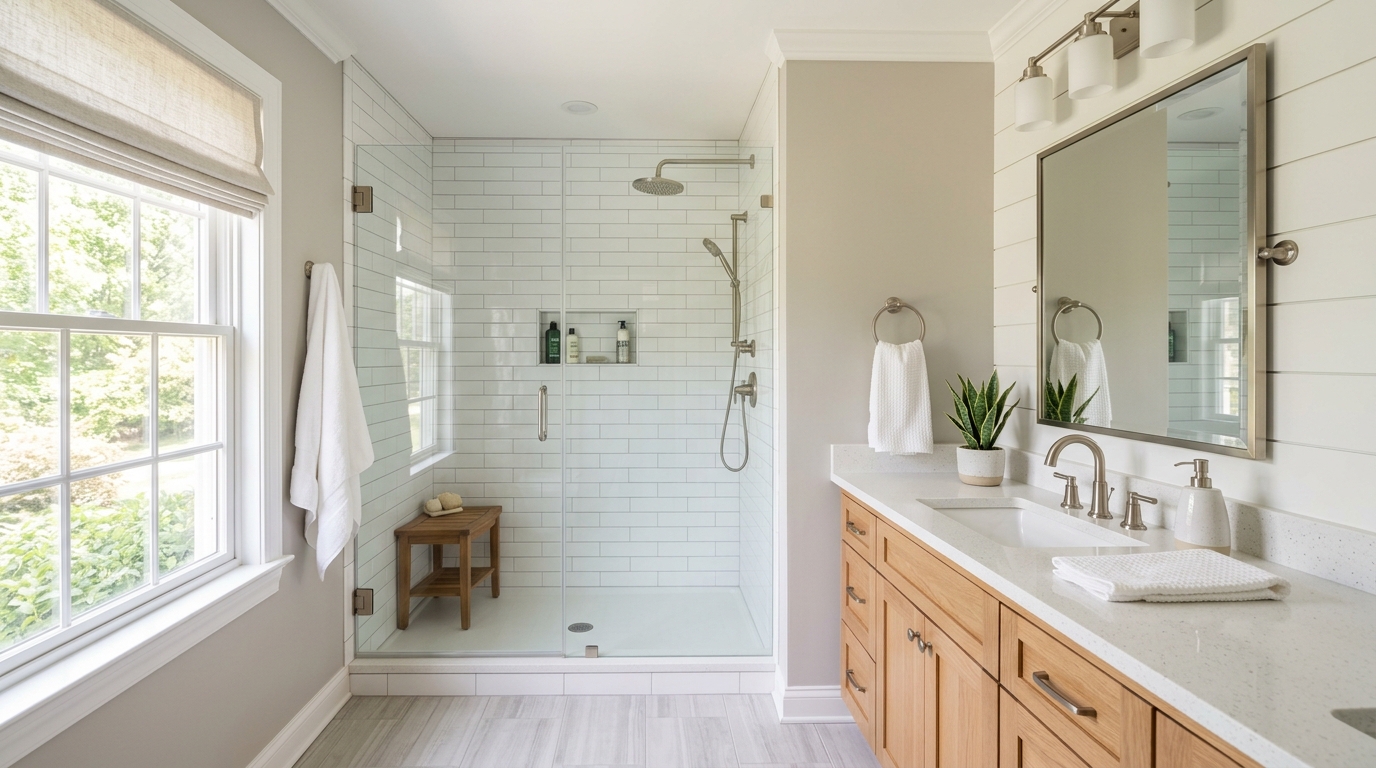
According to the 2025 Remodeling Cost vs. Value report, a midrange bathroom remodel returns approximately 66% of its cost at resale — one of the strongest returns of any home improvement project. In Chester County’s active real estate market, an updated bathroom can meaningfully shorten days on market and support a higher asking price.
If your bathroom is 20+ years old and has never been renovated, it’s almost certainly overdue. The question isn’t really if you should renovate — it’s when, and how much.
What to do: Start with a free in-home assessment. We’ll walk through the space, identify any structural or plumbing concerns, and give you an honest estimate for what a renovation would involve — whether that’s a targeted partial refresh or a full gut renovation.
What Happens If You Wait?
The honest answer: small problems become bigger ones. A hairline crack in grout becomes water intrusion. Water intrusion becomes subfloor damage. Subfloor damage becomes structural rot. What could have been a $12,000 renovation becomes a $25,000 repair job.
We’re not saying every bathroom needs to be renovated immediately. But if you’re seeing two or more of the signs above, the cost of waiting typically exceeds the cost of acting. Chester County’s older housing stock — particularly homes in West Chester, Exton, and Kennett Square built before 1990 — tends to have bathrooms that have been deferred for too long.
If you’re thinking about a kitchen renovation as well, bundling projects with one contractor can save on mobilization and scheduling — and a kitchen + bath renovation dramatically elevates the feel of the entire home.
FAQs: Bathroom Remodeling Signs & Timing in Chester County PA
How urgent is it if I see mold in my bathroom?
Surface mold on tile or caulk can often be cleaned and managed. But if mold keeps returning, or if you see it at the base of walls, near the subfloor, or spreading across the ceiling — that’s a sign of persistent moisture intrusion that needs professional attention. Don’t just clean it; find out where the water is coming from.
Can I just replace the vanity and call it done?
If the rest of the bathroom is in good shape and you’re happy with it, a vanity swap is a legitimate partial refresh. But if the tile, grout, plumbing, or electrical also need attention, a piecemeal approach usually costs more in the long run than tackling it all at once.
How much does a bathroom remodel cost in Chester County PA?
Partial refreshes typically run $5,000–$15,000. Full gut renovations range from $18,000–$40,000+ for a standard bathroom. We cover pricing in detail in our bathroom renovations guide.
Do I need a permit to remodel my bathroom in Chester County?
It depends on the scope. Cosmetic work (new fixtures, paint, vanity on same drain location) typically doesn’t require a permit. Plumbing changes, electrical work, and structural modifications do. Every township in Chester County — West Chester Borough, Tredyffrin, Westtown, East Goshen — handles permits differently. Smarter Improvements researches and pulls all required permits for every project.
How do I get started?
The easiest first step is a free in-home consultation. We’ll assess your bathroom, identify any structural or plumbing concerns, and walk you through realistic options and pricing. No pressure, no upselling. Schedule your consultation here.
Is Your Bathroom Ready for a Renovation?
Free in-home assessments throughout Chester County, Delaware County & Montgomery County PA
Schedule Your Free Consultation →About Justin Mahalik
Justin Mahalik is the owner of Smarter Improvements and has been renovating Chester County PA homes for over 15 years. Specializing in bathroom and kitchen renovations, Justin and his team bring craftsmanship, honest communication, and deep local knowledge to every project — from West Chester to Phoenixville to Kennett Square.