
When Chester County homeowners start planning a bathroom renovation, one of the first decisions they face is flooring. Two options dominate nearly every conversation: ceramic or porcelain tile and luxury vinyl plank (LVP). Both have passionate advocates, and both can look stunning in the right setting.
But they’re not interchangeable. Each has real strengths and real weaknesses — and the right choice depends on your bathroom’s use, your budget, and how long you plan to stay in the home. Here’s an honest breakdown from a Chester County contractor who installs both.
- Porcelain and ceramic tile is the gold standard for durability — with proper installation it can last 50+ years and adds the most resale value.
- Luxury vinyl plank is warmer underfoot, easier to install, and significantly less expensive — a great choice for budget-conscious renovations or secondary bathrooms.
- For primary bathrooms in Chester County homes, tile typically delivers the stronger ROI at resale.
- LVP works exceptionally well in half baths, guest baths, and basements where cost and comfort matter more than prestige.
- Either choice, installed well, transforms a dated bathroom. The difference is in the details — substrate prep, grout quality, and plank locking systems matter enormously.
The Case for Tile: Durability, Resale Value, and Classic Appeal
Ceramic and porcelain tile has been the go-to bathroom flooring material for generations — and for good reason. Installed correctly over a properly prepared substrate, tile is essentially permanent. We’ve torn out tile in Chester County homes that was laid in the 1960s and it looked nearly as good as the day it was set.
Porcelain tile is denser and harder than ceramic, making it the better choice for high-traffic bathrooms, wet areas, and floors that take daily abuse. Large-format porcelain tiles (24″x24″ or larger) are trending heavily in West Chester and Malvern renovations right now — they create a clean, expansive look with minimal grout lines.
Why homeowners choose tile:
- Longevity — Tile with proper grout maintenance can genuinely last decades. Nothing else comes close.
- Resale value — In Chester County’s real estate market, tile floors in a primary bathroom are expected. Buyers notice and reward quality tile work.
- Water resistance — Tile itself is impervious to water. The vulnerability is grout — which is why grout sealing and maintenance matter.
- Design range — From classic subway to large-format marble-look porcelain to mosaic accents, tile offers more design options than any other flooring.
- Heated floor compatibility — Tile is the ideal surface over radiant in-floor heating, which is increasingly popular in Chester County primary baths.
The honest downsides of tile:
- Cold underfoot — Tile is cold in the morning without radiant heating underneath. In Pennsylvania winters, this is a real quality-of-life consideration.
- Harder to DIY — Proper tile installation requires substrate preparation, thin-set consistency, correct layout, and careful grouting. Improperly installed tile cracks and fails.
- Higher cost — Materials and labor for quality porcelain tile typically run $12–$22 per square foot installed in Chester County. Premium large-format tile or complex patterns run higher.
- Grout maintenance — Grout needs to be sealed and occasionally regrouted. It stains. It cracks. It’s the Achilles heel of tile floors.
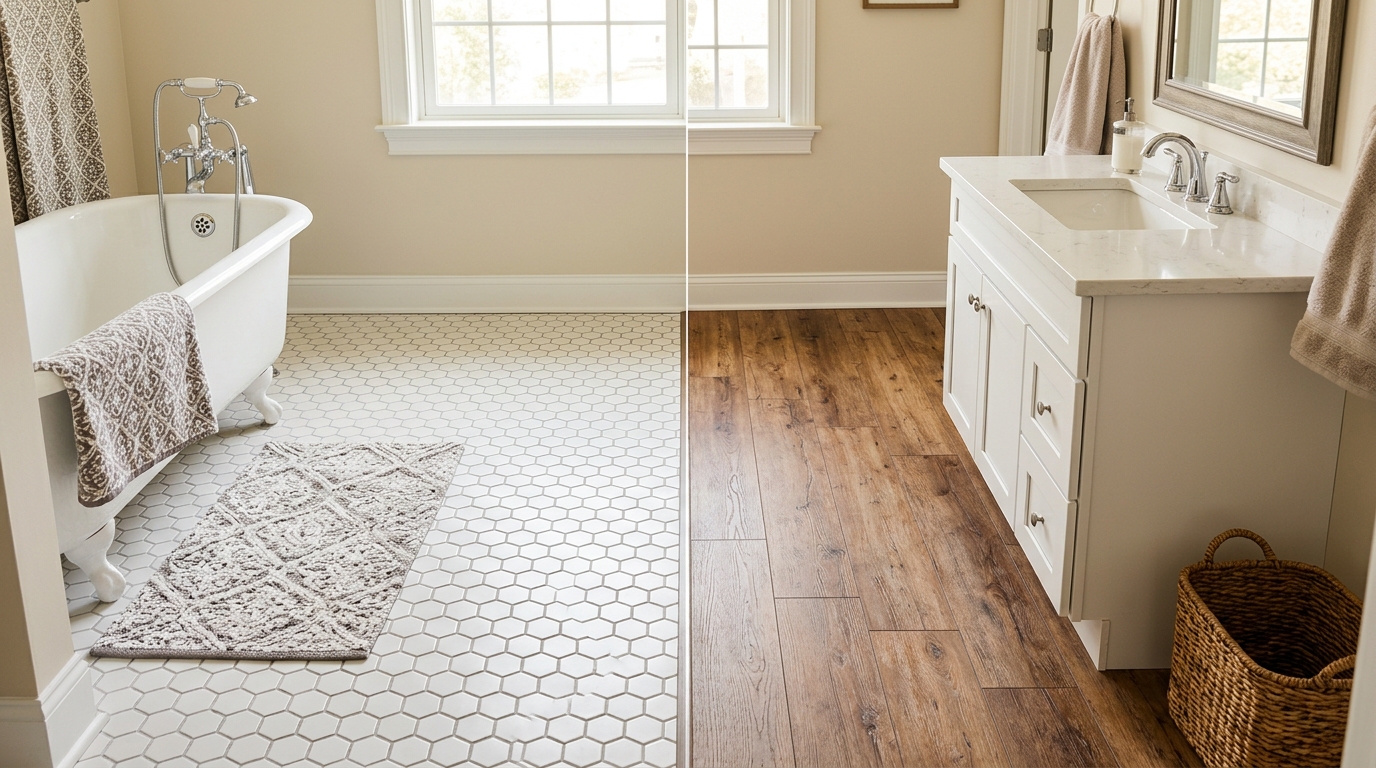
The Case for Luxury Vinyl Plank: Warmth, Value, and Ease
Luxury vinyl plank has come a long way from the vinyl flooring of the 1980s. Today’s LVP is thick, rigid, waterproof, and printed with high-resolution photography of wood or stone — at a glance, quality LVP is genuinely difficult to distinguish from real hardwood.
In Chester County bathrooms — especially guest baths, half baths, and basement bathrooms — LVP has become extremely popular. It solves several real problems that tile doesn’t: it’s warm underfoot, forgiving of minor subfloor imperfections, and significantly less expensive.
Why homeowners choose LVP:
- Warm underfoot — LVP has a slight give and doesn’t conduct cold the way tile does. In a Pennsylvania winter, this matters.
- 100% waterproof — Quality LVP (look for a waterproof core, not just water-resistant) handles bathroom moisture, splashes, and even minor flooding without warping.
- Lower cost — LVP installed typically runs $6–$12 per square foot in Chester County — roughly half the cost of quality tile work.
- Faster installation — Click-lock LVP planks go down quickly over most existing substrates, meaning less labor cost and less time without a functioning bathroom.
- No grout — No grout lines means no grout maintenance, staining, or cracking. Clean-up is simpler too.
The honest downsides of LVP:
- Shorter lifespan — Even premium LVP typically carries a 15–25 year residential warranty. Quality tile can outlast the house.
- Lower resale impact — Buyers in Exton, Downingtown, and Phoenixville expect tile in primary baths. LVP reads as a budget choice to many buyers, which can affect perceived value.
- Can’t be refinished — When LVP wears out or gets damaged, it gets replaced. Tile can be regrouted, cracked tiles can be replaced individually.
- Heat limitations — Most LVP is not compatible with radiant in-floor heating. Check the manufacturer specs carefully before installing over a heated slab.
Side-by-Side Comparison: Tile vs. LVP for Chester County Bathrooms
| Factor | Porcelain / Ceramic Tile | Luxury Vinyl Plank |
|---|---|---|
| Lifespan | 30–50+ years | 15–25 years |
| Installed Cost (Chester County) | $12–$22/sq ft | $6–$12/sq ft |
| Warmth Underfoot | Cold (unless radiant heated) | Warm, slight give |
| Water Resistance | Excellent (grout is vulnerable) | 100% waterproof (quality LVP) |
| Resale Value | Higher (primary baths) | Good (secondary baths) |
| Maintenance | Grout sealing required | Very low maintenance |
| Radiant Heating Compatible | Yes (ideal) | Often no — check specs |
| Best For | Primary baths, high-traffic, long-term homes | Guest baths, half baths, budgets, rentals |
What Chester County Homeowners Are Actually Choosing
In our experience renovating bathrooms across Tredyffrin, Westtown, Kennett Square, and East Goshen, the pattern is fairly consistent:
- Primary bathrooms — Tile, almost always. Buyers expect it, and it holds value best in Chester County’s competitive real estate market.
- Guest and hall bathrooms — About 50/50. Tile for homeowners who want uniformity throughout; LVP for those prioritizing budget and are planning to sell within 5–7 years.
- Half baths and powder rooms — LVP is popular here. Smaller square footage means lower overall cost for either option, and the warmth advantage of LVP matters in a room guests use frequently.
- Basement bathrooms — LVP almost always. Basements need a fully waterproof solution that handles any moisture from below, and the comfort factor matters in a space that’s often already cold.
If you’re planning a bathroom renovation and thinking about doing the whole house at once, we can help you develop a flooring strategy that makes sense room by room — and keeps the visual flow consistent throughout your home.
Don’t Overlook the Installation Quality
Whatever you choose, installation quality matters as much as material quality. We’ve seen expensive tile fail in two years because of a poorly prepared substrate. We’ve seen LVP look terrible because it was installed over an uneven subfloor without proper underlayment.
For tile, the critical steps are: a clean, flat, structurally sound substrate (often cement board over the existing subfloor), proper thin-set coverage, and quality grout sealed after installation. For LVP, the floor needs to be flat within 3/16″ over 10 feet — high spots and low spots both cause problems with click-lock systems over time.
This is why we recommend working with an experienced local contractor rather than going the big-box DIY route. The material cost difference is often smaller than people expect — it’s the labor and prep that separates a renovation that looks great at year 10 from one that starts having problems at year 3.
Speaking of long-term home investment: if you’re also thinking about your kitchen, quality kitchen renovations and bathroom updates go hand-in-hand for maximizing property value in Chester County.
FAQs: Tile vs. Luxury Vinyl for Chester County Bathrooms
Is LVP really waterproof, or just water-resistant?
It depends on the product. Quality LVP with a waterproof core (WPC or SPC construction) is genuinely waterproof — meaning the plank itself won’t swell or warp if water gets on it. However, water can still seep through the seams and damage the subfloor below. In wet areas like shower floors, tile remains the safer long-term choice.
Can I put LVP in a shower or tub surround?
No. LVP is appropriate for bathroom floors but not for wet areas like shower floors, tub surrounds, or areas with direct water exposure. Tile is the only appropriate material for those surfaces.
Does LVP add resale value in Chester County?
It can — an updated bathroom with quality LVP is significantly more appealing than an outdated one with old tile. But for primary bathrooms in Chester County’s competitive market, buyers generally expect tile. LVP in a secondary bathroom won’t hurt you; LVP in the master bath may leave some value on the table.
How long does each take to install?
A typical bathroom floor tile installation takes 2–3 days including prep, setting, and grout cure time. LVP can often be completed in a single day over a suitable substrate. If you’re on a tight timeline or can’t be without a bathroom for long, LVP has a clear advantage.
What if my subfloor isn’t perfect?
Both materials require a flat, stable subfloor — but they handle imperfections differently. LVP requires a flat surface (within 3/16″ over 10 feet); tile requires a structurally rigid one. We always assess the subfloor before recommending materials. In some cases, subfloor repair adds cost to either option.
How do I get started?
The best first step is a free in-home consultation. We’ll assess your bathroom, talk through your goals and budget, and give you an honest recommendation on flooring and the full scope of the renovation. Schedule your free consultation here.
Not Sure Which Flooring Is Right for Your Bathroom?
Free in-home consultations throughout Chester County, Delaware County & Montgomery County PA
Schedule Your Free Consultation →About Justin Mahalik
Justin Mahalik is the owner of Smarter Improvements and has been renovating Chester County PA homes for over 15 years. Specializing in bathroom and kitchen renovations, Justin and his team bring craftsmanship, honest communication, and deep local knowledge to every project — from West Chester to Phoenixville to Kennett Square.