
Quick Summary
- Quartz is the most popular countertop for Chester County remodels — non-porous, low-maintenance, and extremely durable.
- Granite and quartzite offer natural stone beauty and high resale value, but require periodic sealing.
- Butcher block adds warmth and character to traditional Colonial kitchens — best used as a secondary surface.
- Laminate has dramatically improved and offers the most budget-friendly entry point without sacrificing style.
- Costs range from $15/sq ft (laminate) to $150+/sq ft (quartzite) installed — choosing the right material for your lifestyle saves money long-term.
- Why Your Countertop Material Matters More Than You Think
- Quartz: The Chester County Favorite
- Granite: Timeless Natural Stone
- Quartzite: The Premium Natural Option
- Marble: Beautiful but High-Maintenance
- Butcher Block: Warmth and Character
- Laminate: Smarter Than You Remember
- Full Cost Comparison
- How to Choose the Right Material for Your Home
- FAQs
Why Your Countertop Material Matters More Than You Think
The countertop you choose affects far more than aesthetics. It influences:- Resale value: According to Remodeling Magazine’s 2025 Cost vs. Value report, a mid-range kitchen remodel in the Philadelphia region — which includes Chester County — recoups an average of 64% at resale. Premium countertop materials like quartz and natural stone are a key driver of buyer appeal in the competitive Chester County real estate market.
- Daily livability: A surface that stains, etches, or chips under normal use becomes a daily frustration. Chester County families tend to have active kitchens — choosing a material that fits your actual lifestyle, not just your Pinterest board, is essential.
- Maintenance costs: Some materials require annual or bi-annual sealing, specialized cleaners, or careful handling that adds up over time. Factor in the lifetime maintenance cost, not just the upfront price.
- Longevity: The right countertop should outlast the home’s next sale and then some. Cheap materials often need replacement within 10–15 years; quality stone or engineered surfaces routinely last 30+ years.
Quartz: The Chester County Favorite
Engineered quartz (brands like Cambria, Silestone, Caesarstone) consistently tops our recommendation list for Chester County kitchen renovations — and for good reason. What it is: About 90–95% crushed natural quartz stone bound with polymer resins. It’s engineered, not quarried as a solid slab. Why Chester County homeowners love it:- Non-porous surface: Unlike natural stone, quartz never needs sealing. It won’t absorb red wine, olive oil, or tomato sauce — a major win for busy family kitchens.
- Consistent appearance: Quartz comes in a vast range of colors and patterns, including convincing marble-look options. Unlike natural stone, there are no surprise veining variations between slabs.
- Durability: Quartz resists scratching, staining, and chips far better than marble and comparably to granite.
- Low maintenance: Soap and water is all you need. No annual sealing, no pH-specific cleaners.
- Not heat-resistant — always use trivets. Direct pot contact can crack or discolor the resin binding.
- Can fade with prolonged UV exposure, which matters if your kitchen has south-facing windows and quartz runs along that wall.
- Cost is in the mid-to-upper range, but the eliminated maintenance costs often make it the best lifetime value.
Granite: Timeless Natural Stone
Granite held the top spot for Chester County kitchen renovations throughout the 2000s and 2010s, and it remains an excellent choice — especially for homeowners who value natural variation and a proven resale track record. What it is: Quarried igneous rock, cut and polished into slabs. Every slab is genuinely unique. Pros:- Heat resistant: You can set a hot pan directly on granite without damage — a real advantage over quartz.
- Scratch resistant: Granite is harder than most knives. It’s virtually impossible to scratch under normal use.
- Unique aesthetics: Every granite slab is one-of-a-kind. The natural variation gives kitchens a character engineered surfaces can’t fully replicate.
- Strong resale appeal: Granite remains a well-understood, trusted material for homebuyers in the Chester County market.
- Requires sealing: Granite is porous. It should be sealed at installation and re-sealed every 1–3 years depending on the stone’s porosity and use patterns.
- Slab variation: The uniqueness that makes granite beautiful also means you need to personally approve the exact slab used in your kitchen. We always take clients to the stone yard to select their slab.
- Some colors are trendy-then-dated: Early-2000s busy brown granites are now a renovation turnoff. Choose a color with staying power — classic whites, greys, and blacks.
Quartzite: The Premium Natural Option
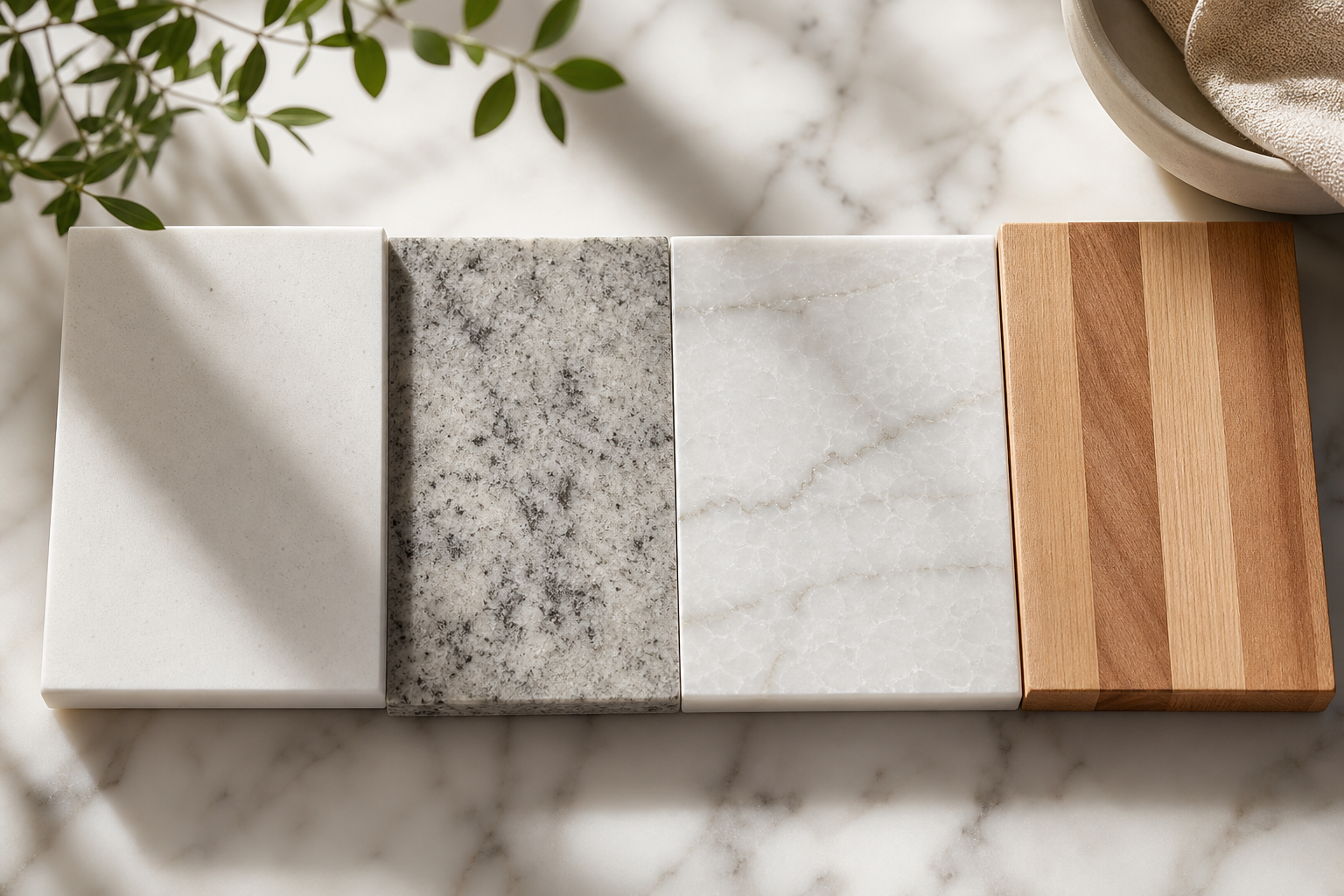
Quartzite is often confused with quartz (engineered) or even granite, but it’s a distinct natural stone — and for certain kitchens in Wayne, Malvern, or West Chester, it’s the most stunning choice available. What it is: A metamorphic rock formed from sandstone under intense heat and pressure. Not to be confused with engineered quartz. Pros:- Extraordinary beauty: Quartzite’s veining and translucence outclasses granite and comes closer to the look of Carrara marble — without marble’s fragility.
- Hardness: Quartzite is harder than granite and significantly harder than marble, meaning better scratch and chip resistance.
- Heat resistance: Like granite, quartzite handles hot pots well.
- Must be sealed regularly: Quartzite is porous and requires diligent sealing — more frequently than granite in most cases.
- Premium cost: Rare, sought-after quartzite varieties (Super White, Taj Mahal, Sea Pearl) command a significant price premium.
- Sourcing requires care: The quartzite market has quality and authenticity issues — always verify your stone with a reputable supplier.
Marble: Beautiful but High-Maintenance
Marble has been a kitchen status symbol for decades, and it’s still requested frequently in upscale Chester County renovations — particularly in Malvern, Wayne, and Paoli. But it requires an honest conversation about lifestyle. Pros:- Unmatched classical beauty — Carrara, Calacatta, and Statuario marble are genuinely stunning.
- Cool surface is excellent for pastry and baking work.
- A timeless choice that never goes out of style.
- Etches easily: Marble reacts chemically with acidic liquids — lemon juice, vinegar, wine, and even some cleaners leave permanent dull marks called etches. These cannot be buffed out without professional honing.
- Stains with porous surfaces: Despite sealing, oil and highly pigmented liquids can stain marble permanently.
- Not ideal for primary prep surfaces: Many designers recommend marble as a secondary island or baking station surface rather than the primary countertop.
Butcher Block: Warmth and Character
Butcher block countertops have experienced a major revival — and in Chester County’s Colonial, farmhouse, and transitional-style kitchens, the warmth they bring is genuinely unmatched. Pros:- Adds irreplaceable warmth and organic texture to kitchens.
- Can be sanded and refinished when scratched or stained — truly renewable.
- Lower upfront cost than stone options.
- Excellent secondary surface for prep islands.
- Requires regular oiling (food-grade mineral oil every few months) to prevent cracking and warping.
- Vulnerable to water damage near sinks — always specify properly sealed butcher block around wet areas.
- Scratches and knife marks are part of the character — some love this, some don’t.
Laminate: Smarter Than You Remember
Laminate countertops have come a long way from the avocado-green counters of the 1970s. Today’s high-pressure laminate (HPL) mimics stone convincingly and offers the best budget-to-performance ratio of any option. Pros:- Dramatic improvement in aesthetics — convincing granite and quartz patterns are widely available.
- Non-porous surface that resists staining without sealing.
- Easy to clean and maintain.
- Lowest installed cost of any option.
- Cannot be repaired if scratched or chipped — the damage is permanent.
- Not heat resistant — hot pans will cause immediate damage.
- Doesn’t carry the same resale cachet as natural or engineered stone in the Chester County market.
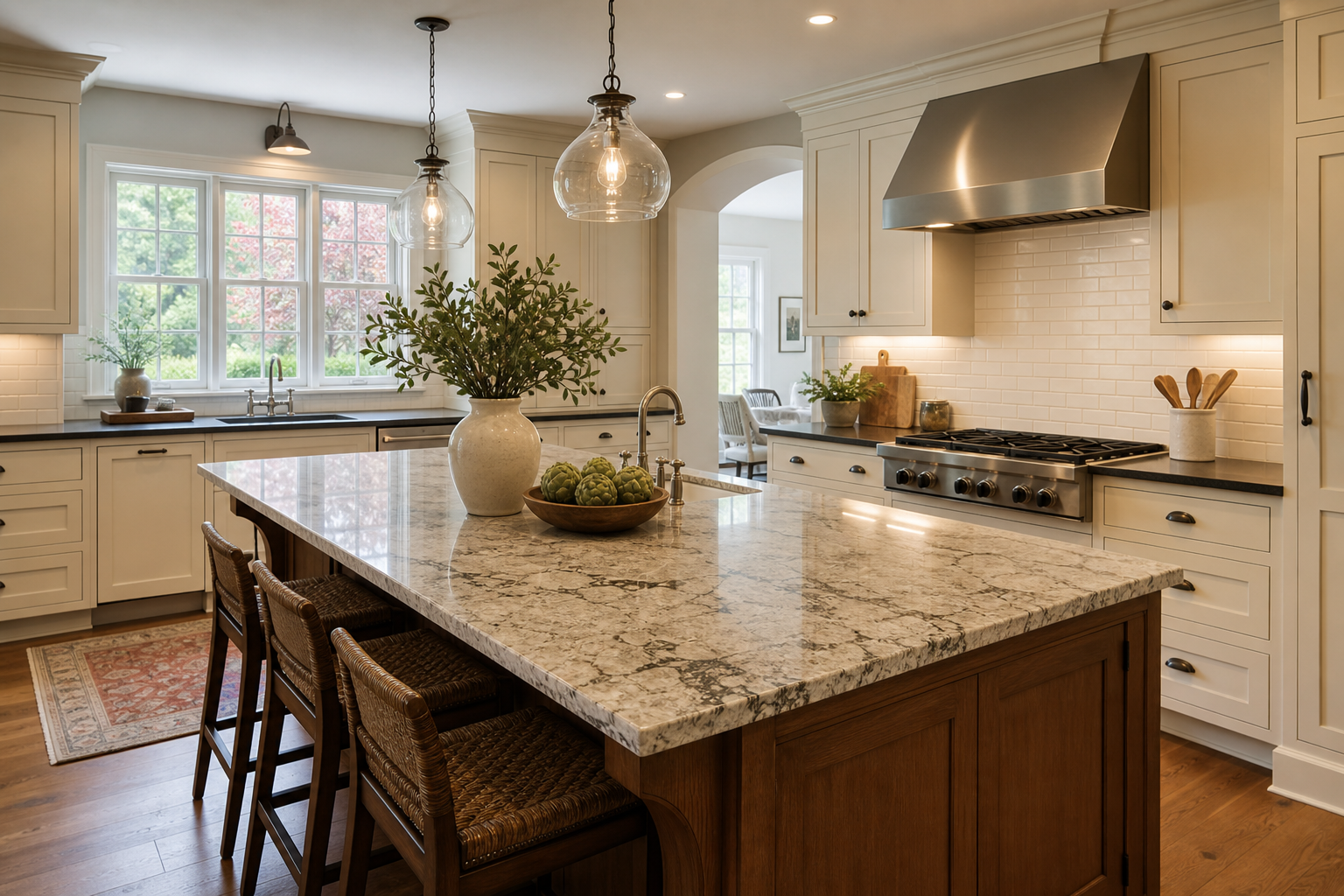
Full Cost Comparison: Chester County PA (2025)
| Material | Installed Cost (per sq ft) | Sealing Required? | Heat Resistant? | Lifespan |
|---|---|---|---|---|
| Laminate | $15 – $40 | No | No | 10–15 years |
| Butcher Block | $40 – $80 | Regular oiling | Yes (with care) | 20–30+ years |
| Quartz (engineered) | $70 – $120 | No | No | 25–30+ years |
| Granite | $60 – $110 | Yes (1–3 years) | Yes | Lifetime |
| Marble | $75 – $150+ | Yes (annually) | Yes | Lifetime |
| Quartzite | $90 – $160+ | Yes (frequently) | Yes | Lifetime |
How to Choose the Right Material for Your Home
Here’s the honest framework we use when helping Chester County homeowners decide:- If you have young kids or a busy household: Choose quartz. No sealing, stain-proof, and tough enough to handle real family life.
- If you love cooking and use hot pans regularly: Granite or quartzite — the heat resistance is genuine and valuable.
- If you want maximum visual impact for an upscale renovation: Quartzite or marble (with eyes open about maintenance).
- If you’re renovating a kitchen in a Colonial or farmhouse home in Phoenixville or Downingtown: Consider pairing quartz or granite on perimeter counters with butcher block on an island — the contrast is stunning and practical.
- If you’re working within a tight budget: Modern laminate is far better than its reputation. Pair it with quality cabinet hardware and a great tile backsplash and the kitchen will look excellent.