

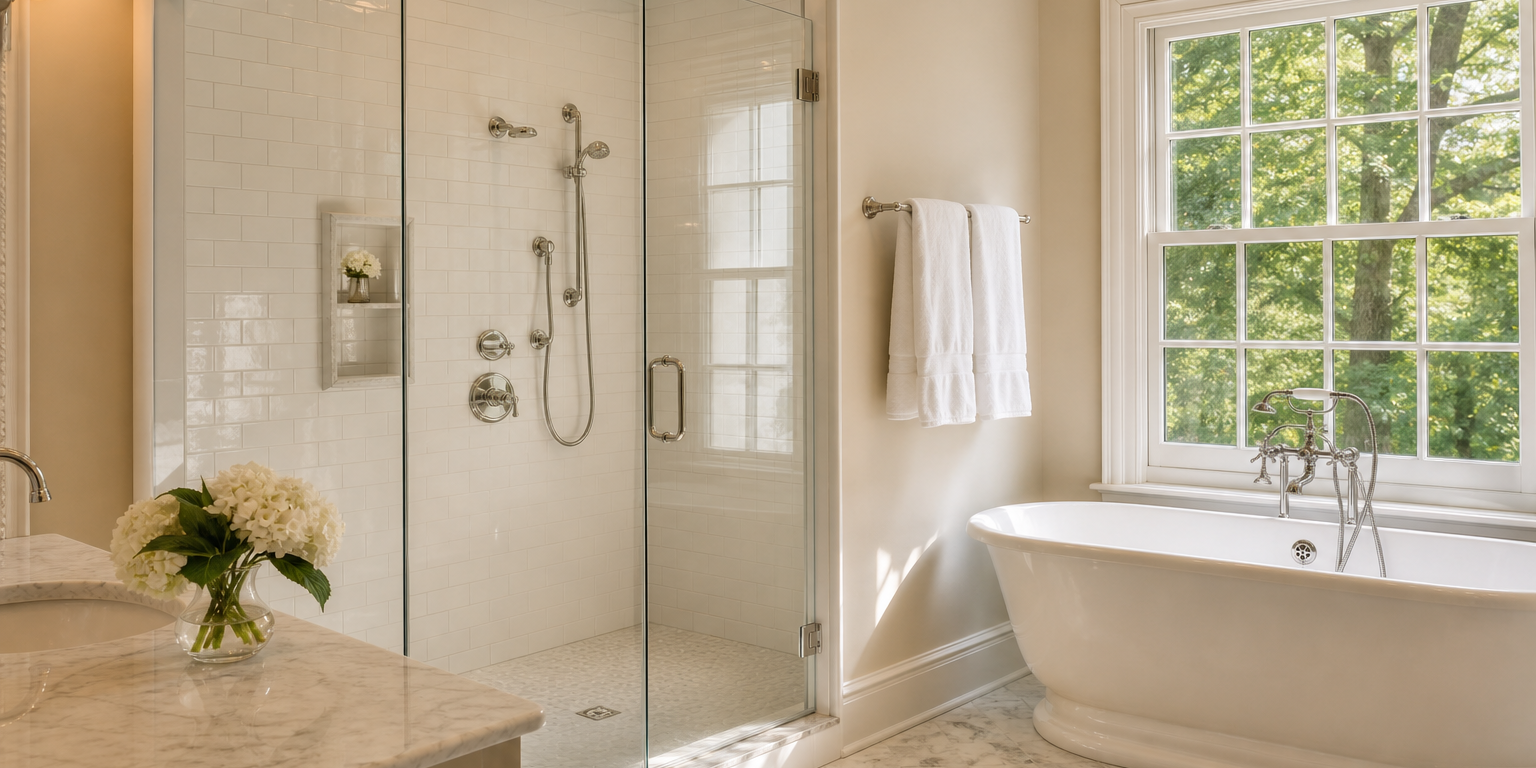
Quick Summary
- Walk-in showers tend to feel more luxurious and are easier to clean — but removing the only tub in a home can hurt resale value.
- Bathtubs remain a must-have for families with young children and buyers who expect them in primary or secondary bathrooms.
- A tub-to-shower conversion in Chester County typically costs $3,000–$8,000; a full master bath remodel runs $12,000–$25,000.
- The right choice depends on your household’s daily use, your floor plan, and whether you plan to sell within 5 years.
- The Shower vs. Tub Debate in Chester County Bathrooms
- The Case for a Walk-In Shower
- The Case for Keeping a Bathtub
- Impact on Home Resale Value
- Cost Comparison for Chester County Homeowners
- Space and Layout Considerations
- How to Make the Final Decision
- Frequently Asked Questions
The Shower vs. Tub Debate in Chester County Bathrooms
Chester County is home to a wide range of housing stock: sprawling colonials in Paoli, tight townhomes near the Berwyn train station, older farmhouses outside Phoenixville, and newer construction in Downingtown subdivisions. Each home type comes with its own bathroom configuration challenges — and that diversity is exactly why there’s no one-size-fits-all answer. What we do know from two decades of bathroom renovation experience in Chester County:- Most Chester County homes over 20 years old have at least one full bath with a tub/shower combo.
- Master bathrooms in higher-end homes often already have both a soaking tub and a separate shower.
- The tub-to-shower conversion trend accelerated significantly post-2020 as homeowners spent more time at home and wanted spa-like showers.
The Case for a Walk-In Shower
There’s a reason walk-in showers have dominated bathroom renovation trends for the past decade. Here’s what Chester County homeowners love about them:More Usable Space
A standard 5-foot tub takes up roughly 15 square feet of floor space. Converting that space to a walk-in shower — especially one with a frameless glass enclosure — makes the bathroom feel dramatically larger and more open. In older Chester County colonials and Cape Cods where bathrooms tend to be compact, this visual expansion is significant.Easier Accessibility
Step-over bathtubs become a hazard as homeowners age. A curbless (zero-threshold) walk-in shower eliminates that risk, making it a smart choice for homeowners who plan to age in place — a growing priority in established Chester County neighborhoods where long-term residency is common.Easier to Clean
No awkward tub scrubbing. A tiled walk-in shower with a linear drain and large-format tiles minimizes grout lines and simplifies cleaning. Opt for a sealed natural stone or porcelain tile and weekly wipe-downs take minutes rather than hours.Spa-Like Aesthetic
Walk-in showers support features that feel genuinely luxurious: rain-head fixtures, body jets, steam capability, built-in niches, and bench seating. These upgrades transform a bathroom from functional to retreat-like — something many Chester County homeowners are investing in as they upgrade their primary suites.Lower Water Usage
A standard bath uses 35–50 gallons of water. A 10-minute shower with a WaterSense-certified fixture uses roughly 20 gallons. If environmental impact matters to you, showers win.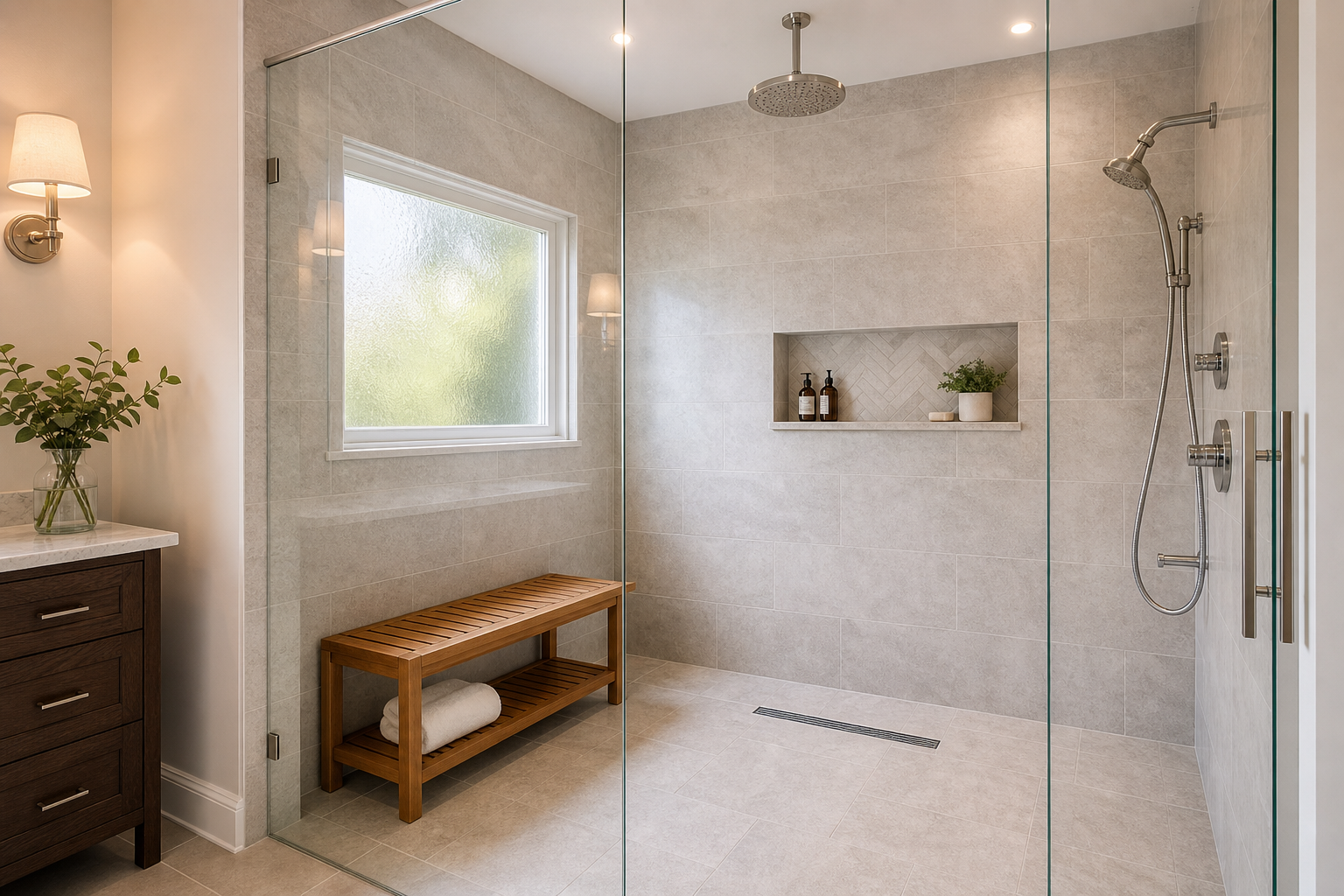
The Case for Keeping a Bathtub
Despite the shower conversion trend, there are real, compelling reasons to keep — or even add — a bathtub in your Chester County home.Young Children
Bathing toddlers and young children in a shower is genuinely difficult. If you have kids under 7 at home, a bathtub isn’t optional — it’s a necessity. Many Chester County parents who renovated out their tubs end up regretting it within a year or two. If your family is in this stage, keep the tub in at least one bathroom.Therapeutic Value
Soaking baths are a legitimate stress-management and pain-relief tool. For homeowners dealing with muscle soreness, arthritis, or high-stress careers — common in Chester County’s professional commuter demographic — a soaking tub delivers value that no shower can replicate.Resale Market Expectations
Chester County’s real estate market is competitive. Buyers — especially families — expect at least one full bathroom with a tub. Removing your home’s only tub can narrow your buyer pool significantly. We’ll cover this in more detail in the next section.Versatility
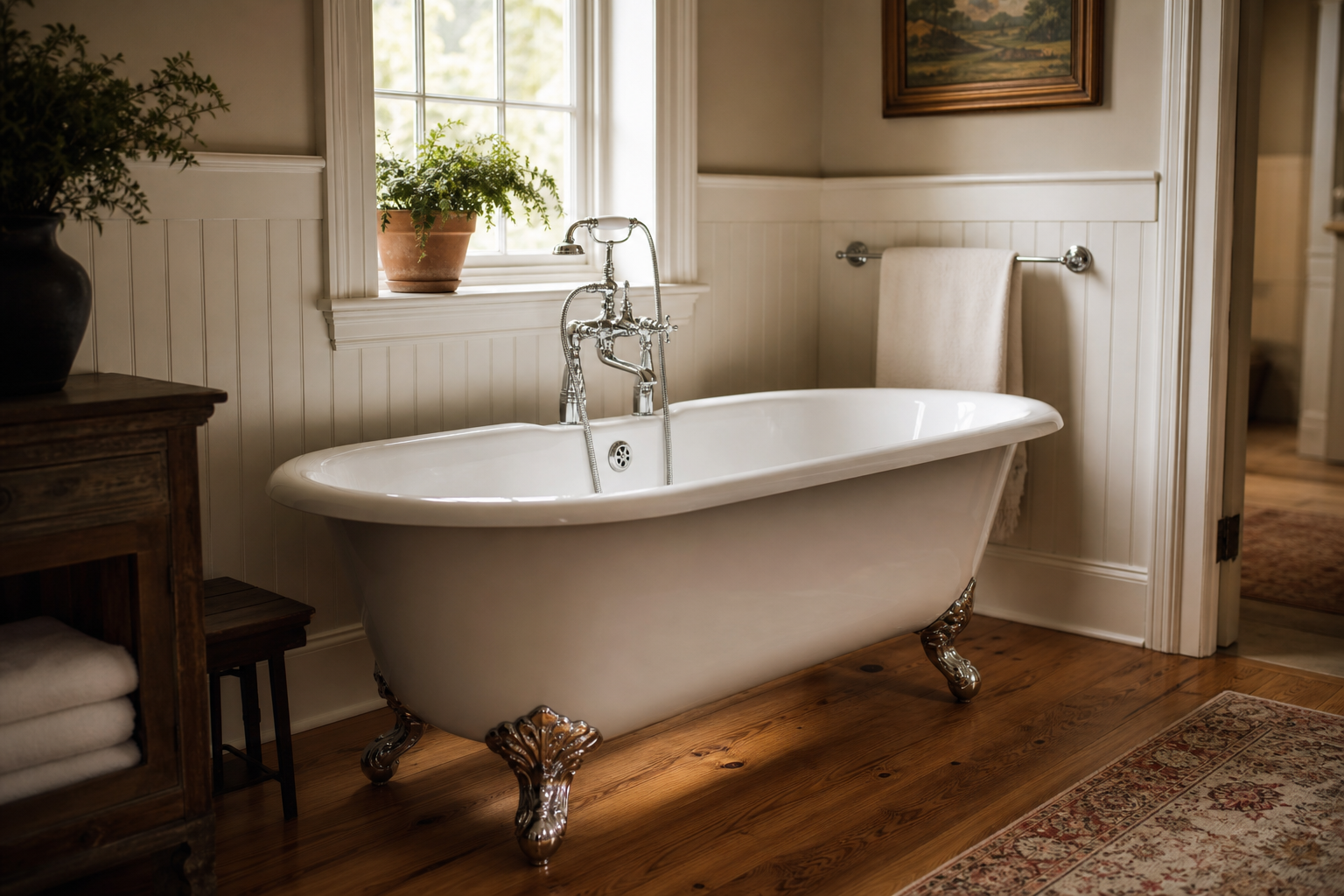
Jetted tubs, freestanding soaker tubs, and clawfoot tubs can serve as a statement design element in a primary bath. A well-chosen freestanding tub in a renovated master bath adds elegance that’s hard to match with any shower configuration.Impact on Home Resale Value
This is where the decision gets financially meaningful. Real estate data from Chester County and surrounding markets consistently shows that homes with zero bathtubs sell harder and often at a discount compared to homes with at least one tub. Here’s what the research and our local experience tell us:- National Association of Realtors (2024): 57% of homebuyers with children said a bathtub was essential in at least one bathroom.
- Zillow research: Listings describing a “walk-in shower” in the master bath performed well — but only when at least one other bathroom in the home had a tub. Tub-free homes saw neutral to slightly negative buyer interest.
- Local context: Chester County’s median home price is above $450,000. At that price point, buyers have high expectations. Losing the only tub in a 3-bed, 2-bath colonial in Downingtown or West Chester is a real risk to your sale price and days-on-market.
- If you have two or more full bathrooms, converting one tub to a walk-in shower is generally safe for resale.
- If you have only one full bathroom, removing the tub is high risk — especially if you plan to sell within 5 years.
- If you have a primary suite with its own bathroom, converting that tub while keeping a tub in the shared hall bath is often the best of both worlds.
Cost Comparison for Chester County Homeowners
Here’s what to budget based on our project experience in Chester County:| Project Type | Estimated Cost Range | Notes |
|---|---|---|
| Tub-to-shower conversion (same footprint) | $3,000 – $8,000 | New tile, shower pan or liner, fixtures, glass door or curtain rod |
| Tub-to-shower with layout change | $6,000 – $14,000 | Includes moving plumbing, adding drain, expanding space |
| Add freestanding soaker tub | $2,500 – $7,000 | Tub + fixtures + floor tile; assumes plumbing in place |
| Full master bath remodel (both) | $15,000 – $30,000 | New shower + soaking tub, full tile, vanity, fixtures |
| Curbless/accessible shower conversion | $5,000 – $12,000 | Requires slope/drainage work; linear drain recommended |
Space and Layout Considerations
Before you commit to either direction, have your contractor assess the physical reality of your bathroom:Available Square Footage
A comfortable walk-in shower needs a minimum of 36″ × 36″ — but 42″ × 42″ or 36″ × 60″ is far more functional. Standard tubs run 60″ × 30″. The conversion footprint is often similar; the key is how the layout reads and flows.Plumbing Location
Keeping the drain and supply lines in the same general location reduces cost dramatically. Moving plumbing in a slab foundation (less common in Chester County, which is mostly crawl space or basement) is expensive. Most Chester County homes have accessible below-floor plumbing, which makes shower conversions more straightforward.Ventilation
Walk-in showers generate significant steam. Ensure your bathroom’s exhaust fan is sized correctly — we recommend at minimum a 110 CFM fan for any bathroom with a walk-in shower. Many older Chester County bathrooms have undersized 50 CFM fans that need upgrading during a renovation.Window Placement
Chester County colonials often have windows in bathrooms at tub height — designed to provide ventilation and light over the tub deck. Converting to a shower may require relocating or obscuring that window, which affects your layout options.How to Make the Final Decision
Here’s the framework we walk our Chester County clients through:- Count your tubs. If you have two or more bathrooms and at least one tub will remain after the renovation, a shower conversion in the primary bath is generally safe.
- Check your timeline. Planning to sell within 3 years? Be conservative. Staying 10+ years? Optimize for how you actually live.
- Assess daily use. Who showers? Who baths? When did anyone in your household last soak in the tub? If the honest answer is “years ago,” that’s a meaningful data point.
- Ask about accessibility. Any household member with mobility considerations? Aging parents who might move in? A curbless shower is often the most forward-thinking choice.
- Set a realistic budget. Get a firm quote — including demo, waterproofing, tile, fixtures, and glass — before committing to a design. The finishes (tile, hardware, fixtures) have a wider price range than the labor.