


Quick Summary
- The sources we checked say to clean gutters at least once a year, and more often if trees stand close to your house.
- Leaves are a common cause of clogs, so trees, gutter guards and gutter size all change how often your gutters need attention.
- Streaks on the gutters, wet ground along the drip line and water spilling over in normal rain are signs they need attention now.
- Ladder work carries real risk. Know the safety basics, or hand the job to a professional.
How often should gutters be cleaned? The sources we checked say at least once a year, and more often if trees stand close to your house. If your gutters keep clogging or overflowing, our gutter installation and repair services can help. This guide explains what changes the answer for homes in Chester County and Delaware County.
How often should gutters be cleaned?
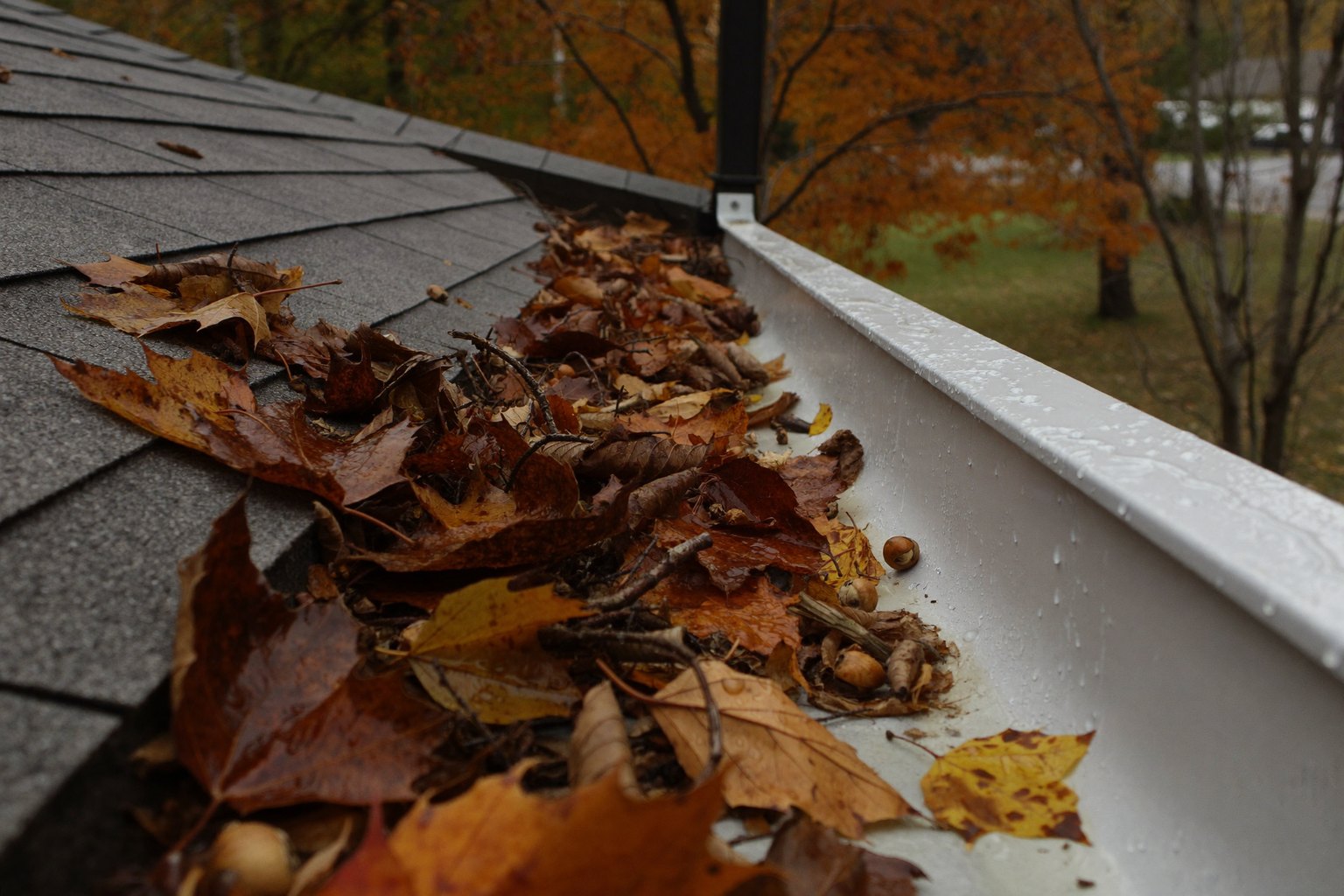
At least once a year. The Northern Virginia Soil and Water Conservation District says gutters should be cleaned free of debris at least once a year, and more frequently if you have trees close to your house. Penn State Extension gives similar advice in its guidance on mosquito control: clean clogged roof gutters every year, especially if leaves tend to plug the drains.
Neither source sets a fixed calendar beyond that, so treat once a year as the minimum, not a promise that your gutters will stay clear in between.
Leaves are a common cause of clogs. As a practical suggestion, late fall, after most of the leaves have come down, is a sensible time to check. If you have trees nearby, a second look after a heavy storm or in spring is reasonable. That is general guidance, not a rule, and your own gutters will tell you more than any schedule.
What changes how often your gutters need cleaning?
A few things matter more than the calendar:
- Trees close to the house. This is the clearest reason to clean more than once a year. Nearby trees can add debris, so check whether your gutters need more frequent attention.
- Gutter guards. The conservation district says guards can help reduce how often cleaning is needed. As our seamless gutters guide notes, no guard eliminates cleaning entirely, so keep checking them. Our gutter guards guide compares the types.
- Gutter size. If your gutters look clean but still spill over in a normal rainstorm, the district says the system may be undersized.
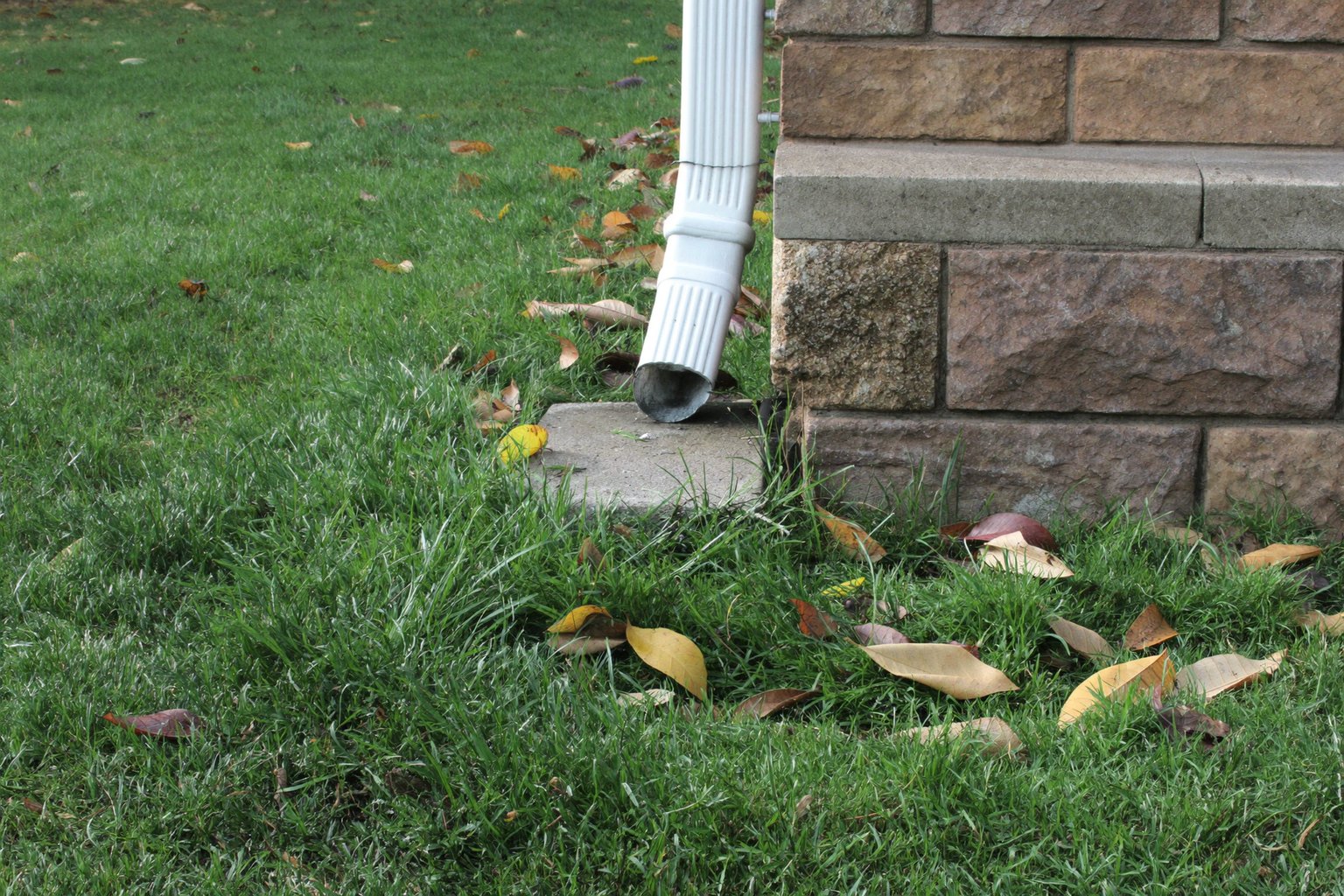
- Downspouts. Keep the outlets clear, and make sure the water leaves them away from the foundation wall. The district lists splash blocks and downspout extensions as common ways to do that.
What are the signs your gutters need attention?
You do not have to wait for a date on the calendar. The conservation district points to these signs of trouble:
- Streaks or watermarks on the outside of the gutters and downspouts.
- Erosion along the drip line, which is the strip of ground under the roof edge.
- Water spilling over the edge during a normal rainstorm.
Our gutter page lists other signs, including gutters pulling away from the fascia, visible cracks, holes or rust, gutters sagging or overflowing in light rain, water pooling around your foundation after rain, and peeling paint on siding below the gutters.
Clogs can also hold water. Penn State Extension notes that plugged rain gutters can become breeding sites for mosquitoes, and that is one more reason not to leave them for another season.
Is it safe to clean gutters yourself?
It can be done safely, but it is not risk-free. An archived page from the National Institute for Occupational Safety and Health (NIOSH), last reviewed in March 2024, reports that each year in the U.S. more than 100 people die and thousands more are injured from ladder-related falls, at work and at home. Its tips include:
- Pick a ladder that is the right height. A ladder that is too short can lead to overreaching and instability.
- Inspect the ladder for damage, and set it on a level, supportive surface.
- Keep three points of contact, and avoid carrying materials and equipment while you climb.
- Never step above the second highest step of a step ladder or the fourth highest rung of an extension ladder.
- With an extension ladder, set the angle at about 75 degrees and extend it at least three feet above the roof or structure edge.
- Stay at least ten feet from power lines, as NIOSH advises. Do not work where you or equipment could approach a line; contact the utility or a qualified professional.
If your gutters are high, the ground is uneven, or you are not comfortable on a ladder, hand the job to a professional.
When should you talk to a professional?
Cleaning does not fix every problem. It is worth getting a second opinion when:
- Water still spills over a clean gutter in normal rain.
- The gutters sag, crack, rust or pull away from the fascia.
- Water keeps pooling near your foundation after rain.
- You want to cut down on cleaning by adding gutter guards.
Our gutter page lists new gutter installation, gutter replacement and gutter guard installation, and we handle repairs too. If you are weighing a replacement, our gutter installation cost guide explains what drives the decision. We offer free, no-obligation estimates, so you can ask what your gutters need before you commit to anything.
Frequently Asked Questions
Do gutter guards mean I never have to clean my gutters?
No. The conservation district says guards can help reduce how often cleaning is needed, not that they remove the need. Check them from time to time, especially after leaf fall and heavy storms.
Should I clean my gutters in the fall or the spring?
The sources we checked set a minimum of once a year rather than a season. Because leaves are a common cause of clogs, checking after most leaves fall is one practical option. A second check after a heavy storm or in spring makes sense if you have trees nearby.
Can clogged gutters cause problems beyond overflow?
Yes. The conservation district says wetness or erosion near foundation walls and the drip line can be very damaging, and it lists gutters that need cleaning as one possible source. Penn State Extension also notes that plugged gutters can hold standing water where mosquitoes breed.
What if my gutters overflow even after I clean them?
A clean gutter that still overflows may be undersized or have another drainage problem. Ask a qualified professional to inspect the gutters and downspouts. The conservation district suggests watching how the gutters work in a normal rainstorm.
Ready for a Gutter Estimate?
If your gutters keep overflowing, are pulling away from the house, or you would like to cut down on cleaning, we can look at your home and talk through the options. Smarter Improvements offers free, no-obligation estimates, and we are happy to talk through your plans in Exton, West Chester, Malvern, Downingtown and the surrounding area.
Get Your Free Gutter Installation Estimate or contact us to get started.
Sources
- Northern Virginia Soil and Water Conservation District: Gutters and Downspouts: Wetness or Erosion Problems (read Nov 6, 2026)
- Penn State Extension: Mosquito Biology and Control (updated Feb 22, 2016; read Nov 6, 2026)
- NIOSH: Falls from ladders are preventable: Make ladder safety a priority (last reviewed Mar 1, 2024; read Nov 6, 2026)